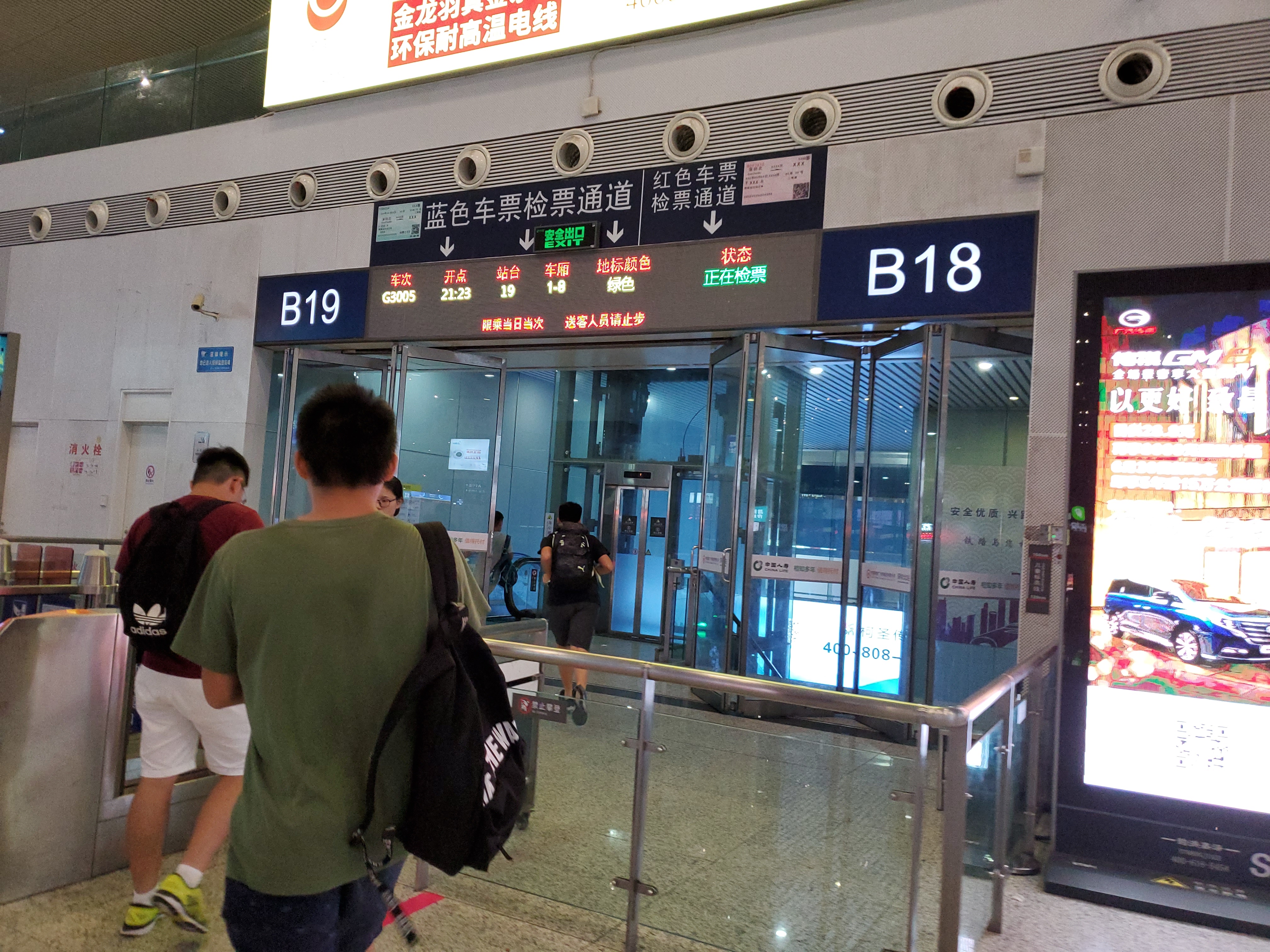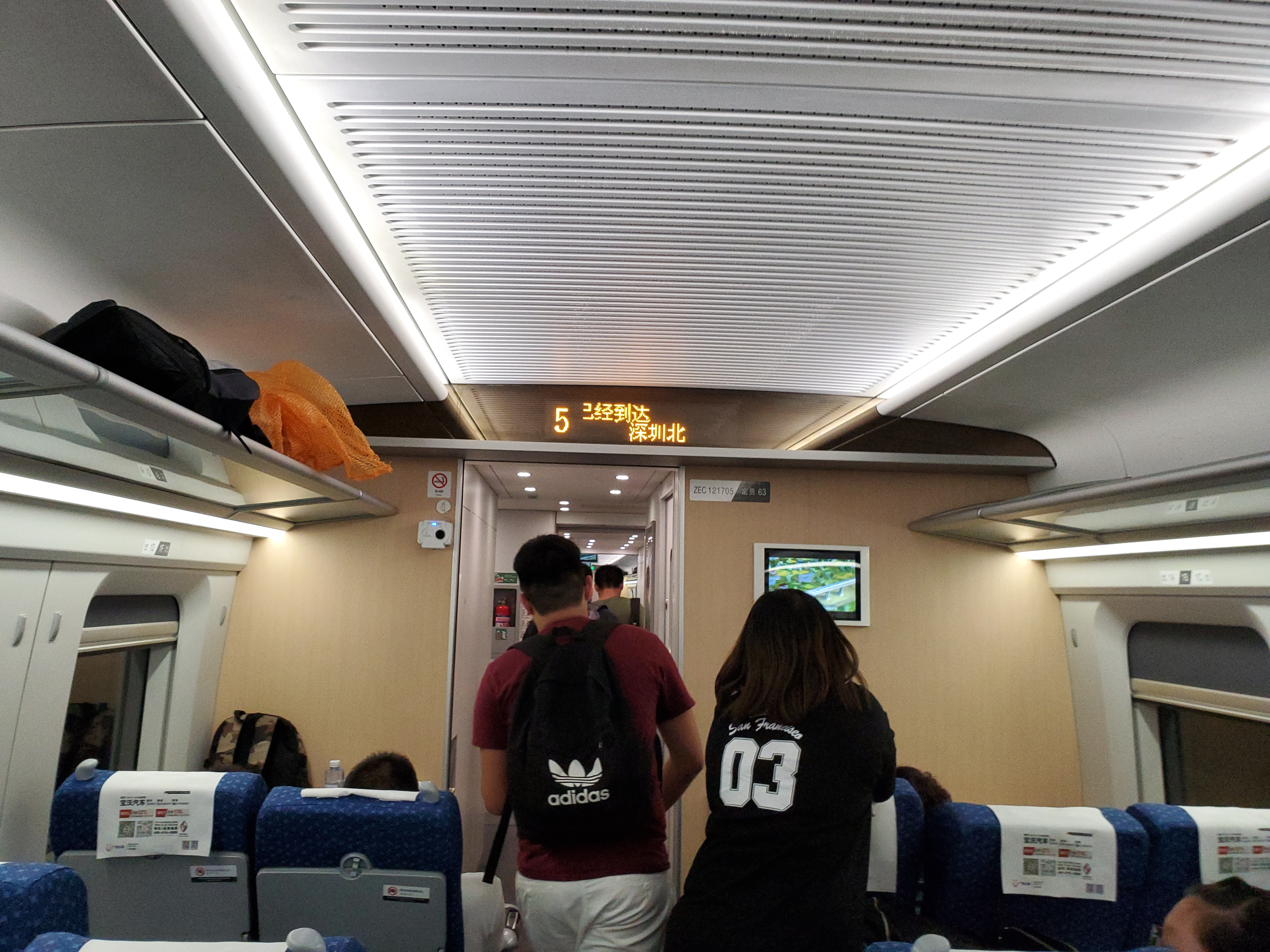
Guangzhou-Shenzhen-Hong Kong Express Rail Link (廣深港高鐵)

The Guangzhou-Shenzhen-Hong Kong Express Rail.

Getting from Hong Kong to the mainland has for many years been an arduous process of cross-border buses, bus + metro + light rail, or if you could afford such, a private car. Not anymore.

With the line opening on the 23/09, tickets are now on sale for the new High Speed Rail Link which smashes traveling times between the regions.

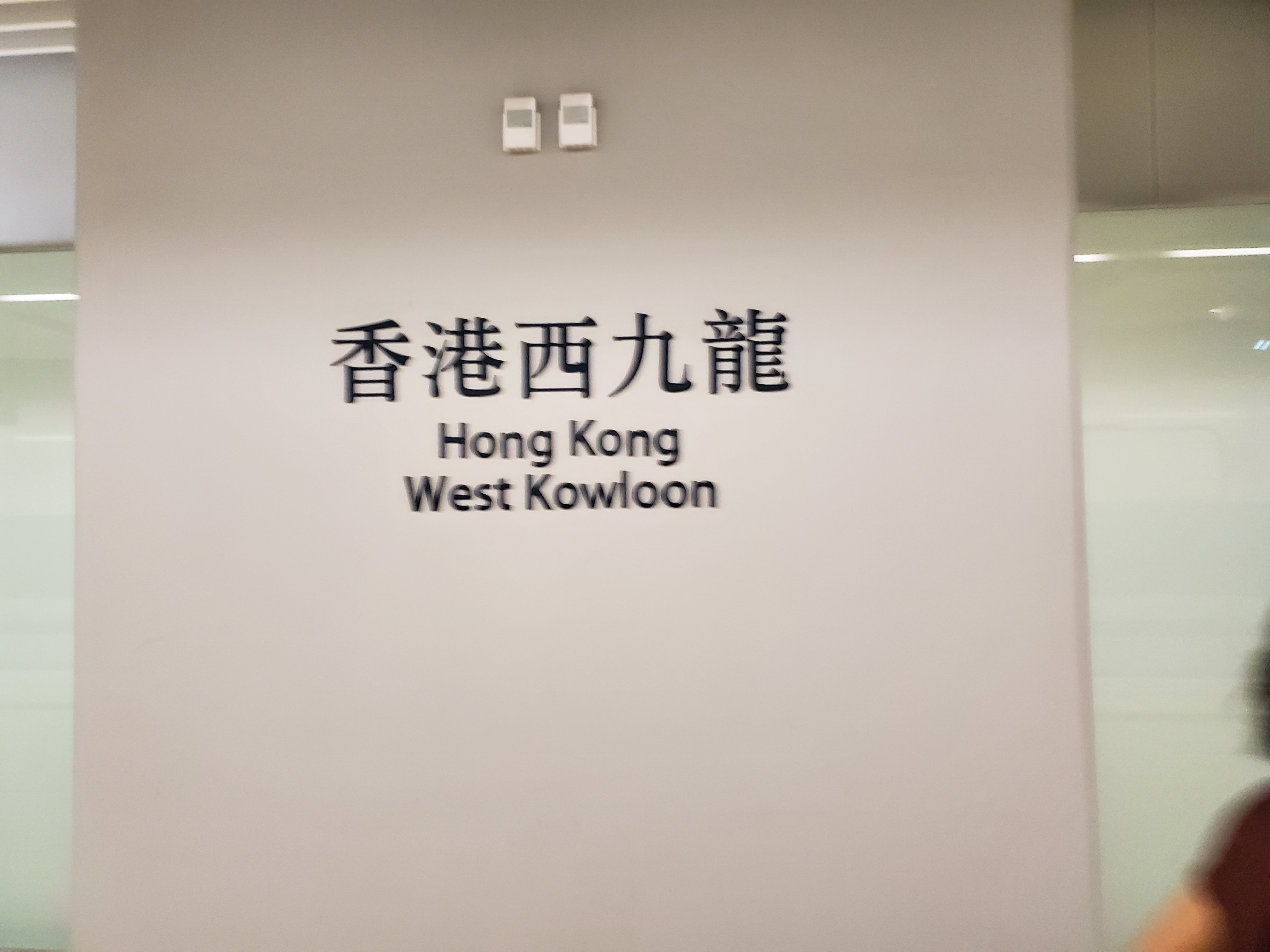
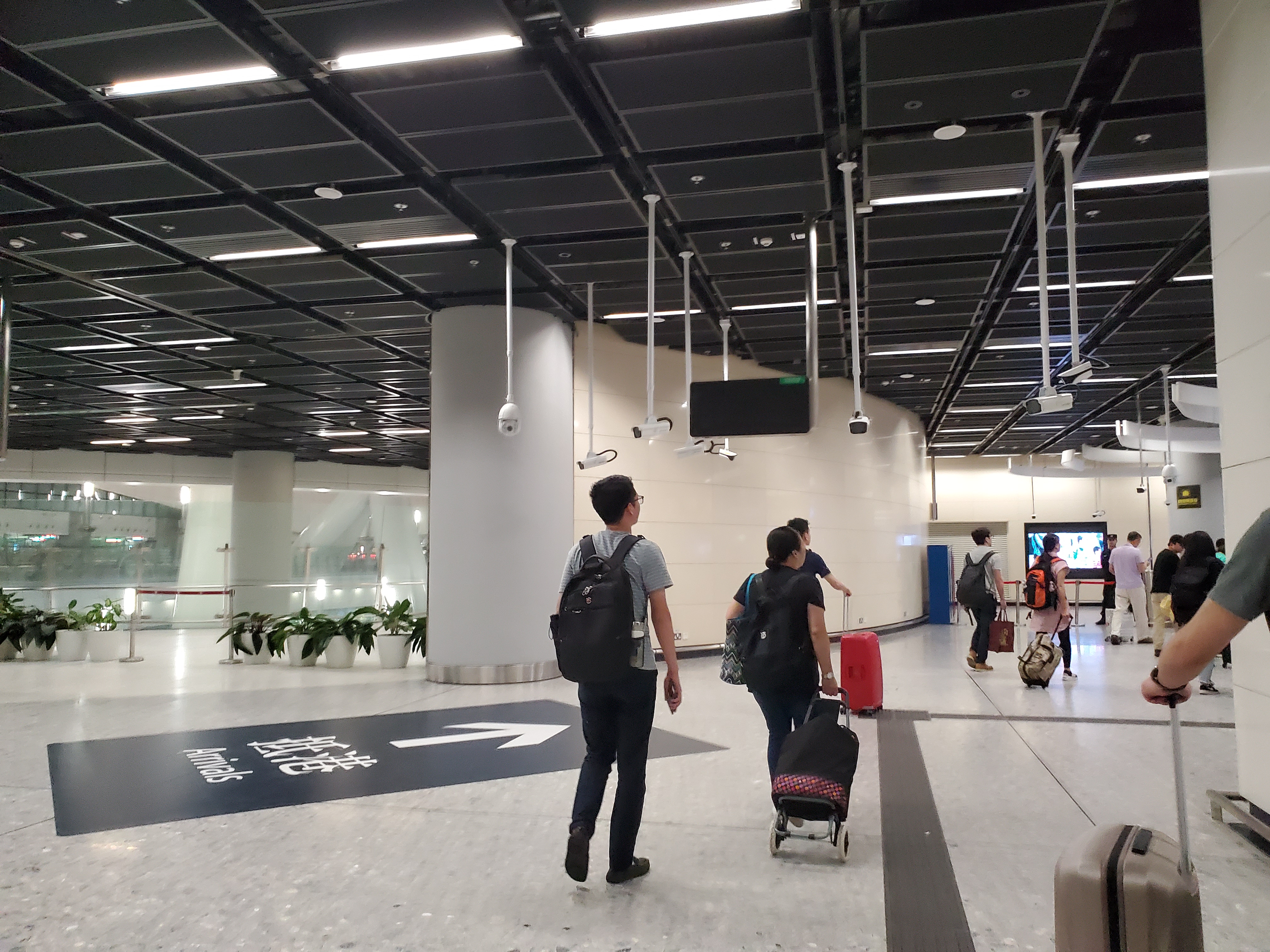
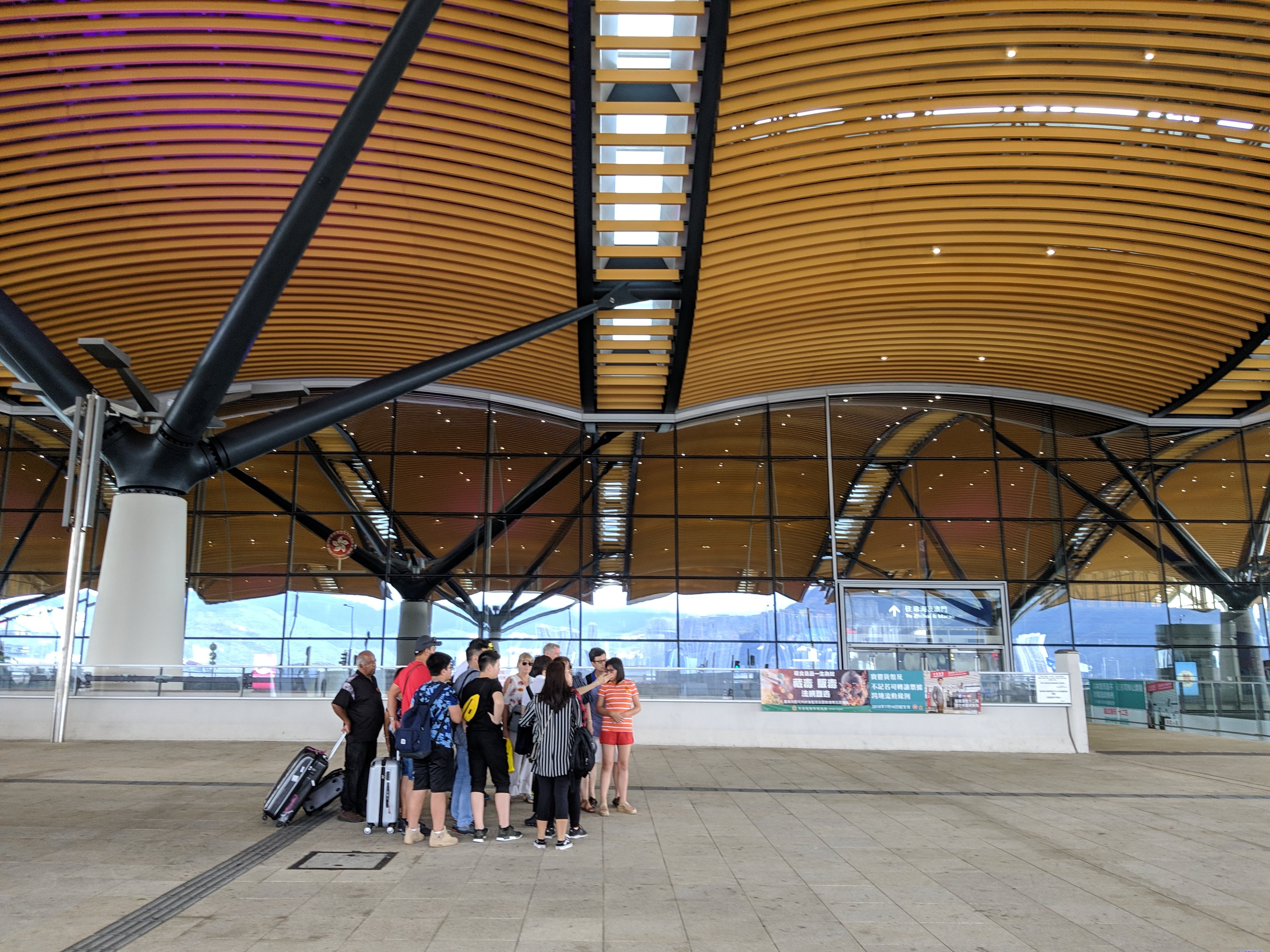
Trains depart from the new West Kowloon Station which can be reached via the Airport Express Rail Line (Kowloon Station) or Tung Chung MTR Line (Austin Station). At West Kowloon Station you will actually go through Mainland Immigration Checkpoint before boarding the train making the journey to mainland China seamless and fast.

StationChineseMetro ConnectionLocation
Guangzhou South广州南GZ Metro Line 2, 7Panyu, Guangzhou
Qingsheng庆盛GZ Metro Line 4Nansha, Guangzhou
Humen虎门Dongguan Metro line 2Humen, Dongguan
Guangmingcheng光明城Bao’an, Shenzhen
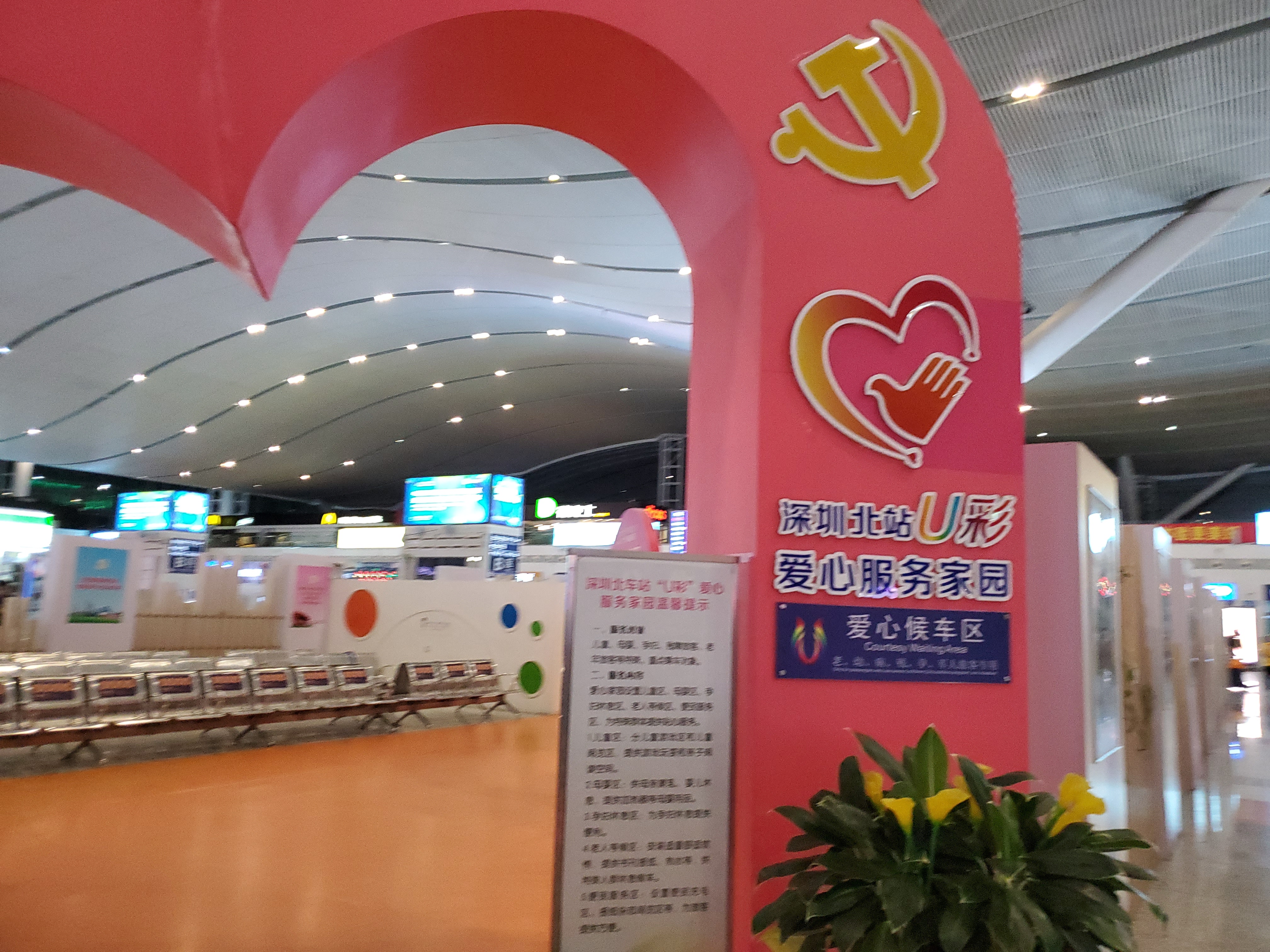
Shenzhen North深圳北SZ Metro line 4,5Bao’an, Shenzhen
Futian福田SZ Metro line 2, 3, 11Futian, Shenzhen
West Kowloon香港西九龙HK MTR Tung Chung line
Airport Express (via Kowloon)
West Rail line (via Austin)
West Kowloon, Hong Kong

You can also buy direct tickets for 38 long-haul destinations within mainland China that are along the Beijing-Guangzhou Passenger Line, Hangzhou-Fuzhou-Shenzhen Passenger Line, Shanghai-Kunming Passenger Line and Guiyang-Guangzhou Passenger Line, which includes major cities such as Beijing, Shanghai, Xiamen, Changsha, Chaoshan, and Hangzhou.

You could also disembark at Shenzhen North Station and continue on High Speed Rail to Beijing, Changsha, Chongqing, Fuzhou, Guilin, Guangzhou, Hangzhou, Hefei, Hong Kong, Huangshan, Jinan, Kunming, Luoyang, Nanchang, Nanjing, Nanning, Shanghai, Shijiazhuang, Suzhou, Xiamen, Xian, Wuhan, Yangshuo, and Zhengzhou

You could also disembark at Guangzhou South Station, and continue on High Speed Rail to destinations include Changsha, Chengdu, Chongqing, Guilin, Guiyang, Hangzhou, Hefei, Huangshan, Jinan, Lanzhou, Luoyang, Nanchang, Nanjing, Nanning, Qingdao, Shijiazhuang, Wuhan, Xiamen, Xian, Yangshuo, Yiwu, Zhengzhou, and Zhuhai.
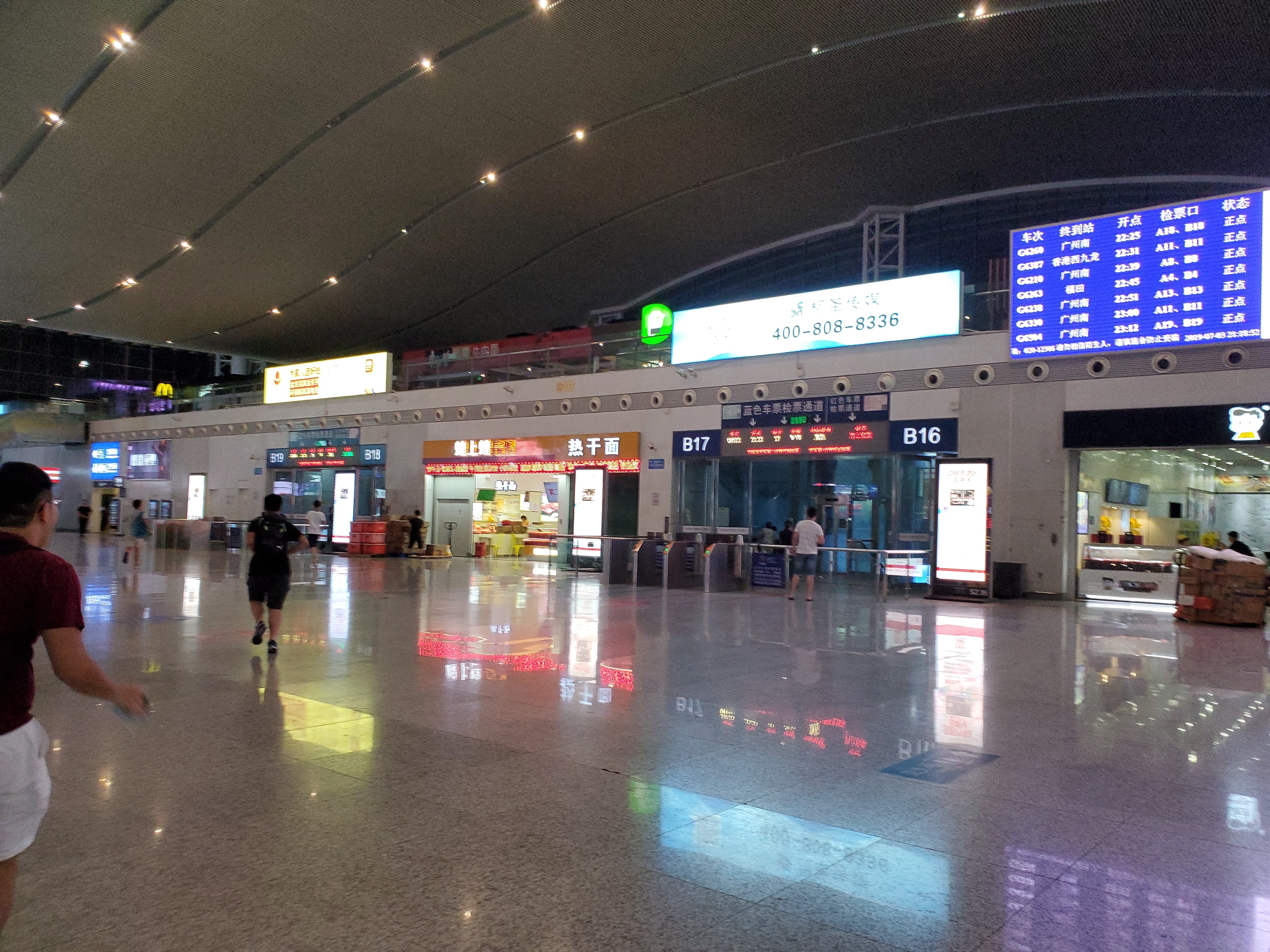
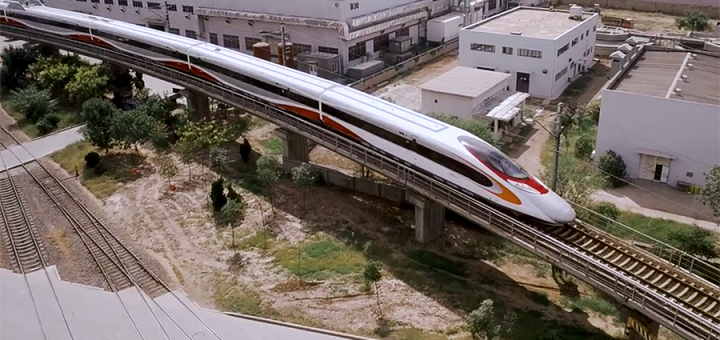
Trains on the Guangzhou-Shenzhen-Hong Kong High Speed Railway

The bullet trains are the Chinese made CH380A, CRH3C, CRH380BK, and CRH380BL. These trains have a top speed in excess of 350 km/h although on the Hong Kong section of the line they will run at 200 km/h (124 mph) and 300 km/h (187 mph) within mainland China.

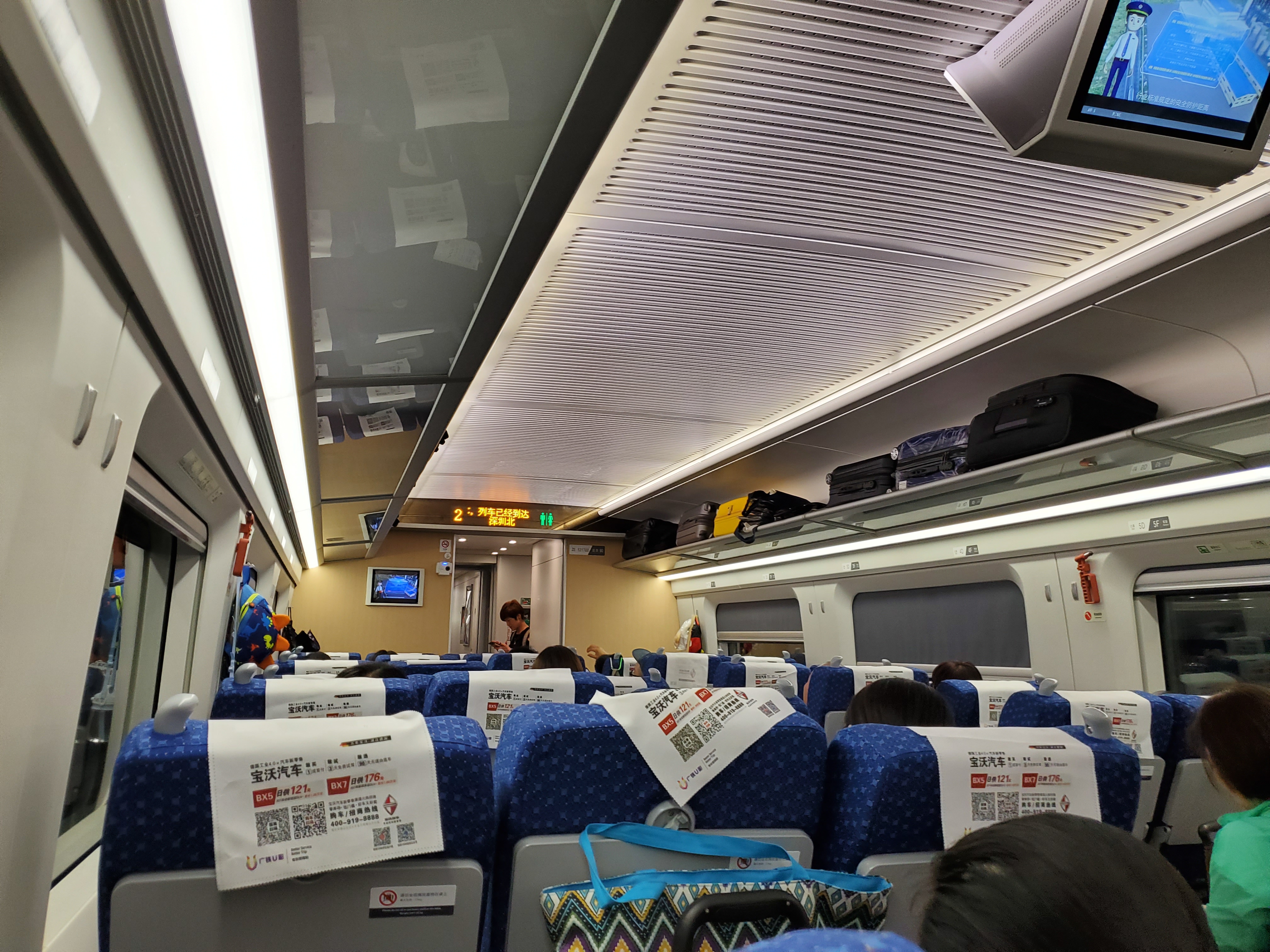
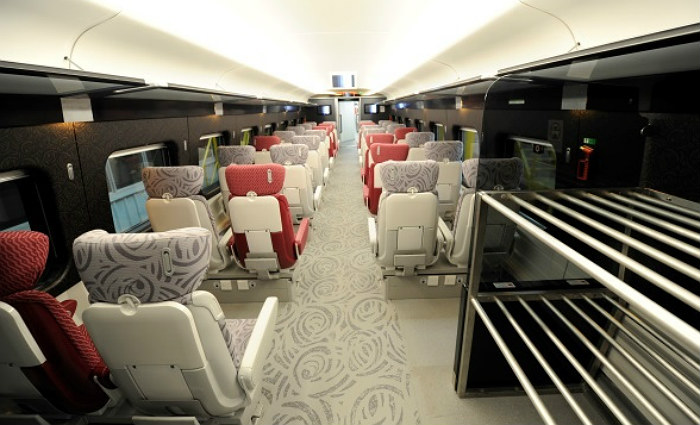
Below is an example of seating although some train units may differ slightly. Each carriage has its own toilet, wash basin, and hot water fountain. There is a large luggage space at the front of the individual carriage and overhead storage for light luggage.

The trains offer second class and first class seats. Some select trains also offer premium class and/or business class.
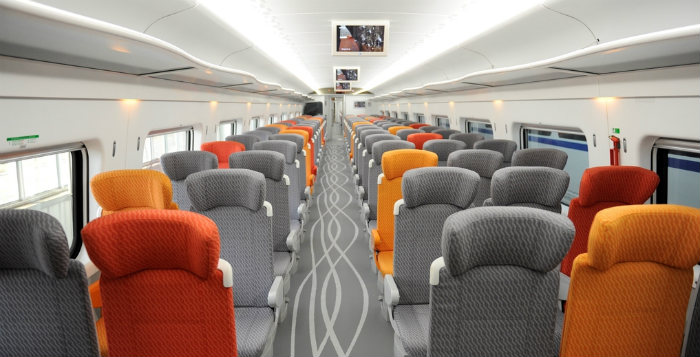
Second-Class Seats
First-Class Seats
WiFi and Power Sockets

WiFi is free but limited to one 15 minute session while in Hong Kong. Once you cross the border you are required to have a mainland phone number or wechat app to reconnect and you get two 15 minute sessions for free. For long-haul trips, you may want to secure a mainland multi-region sim card with enough data if net access is important. 

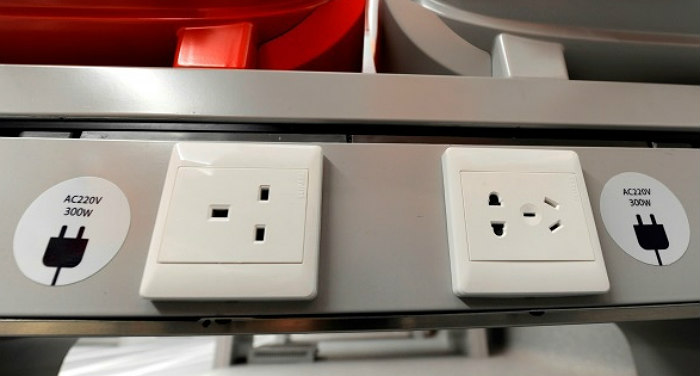
First class and second class seats have power sockets available. Power sockets handle most all plug types.

Hong Kong-Zhuhai-Macao Bridge (港珠澳大橋)

Related image
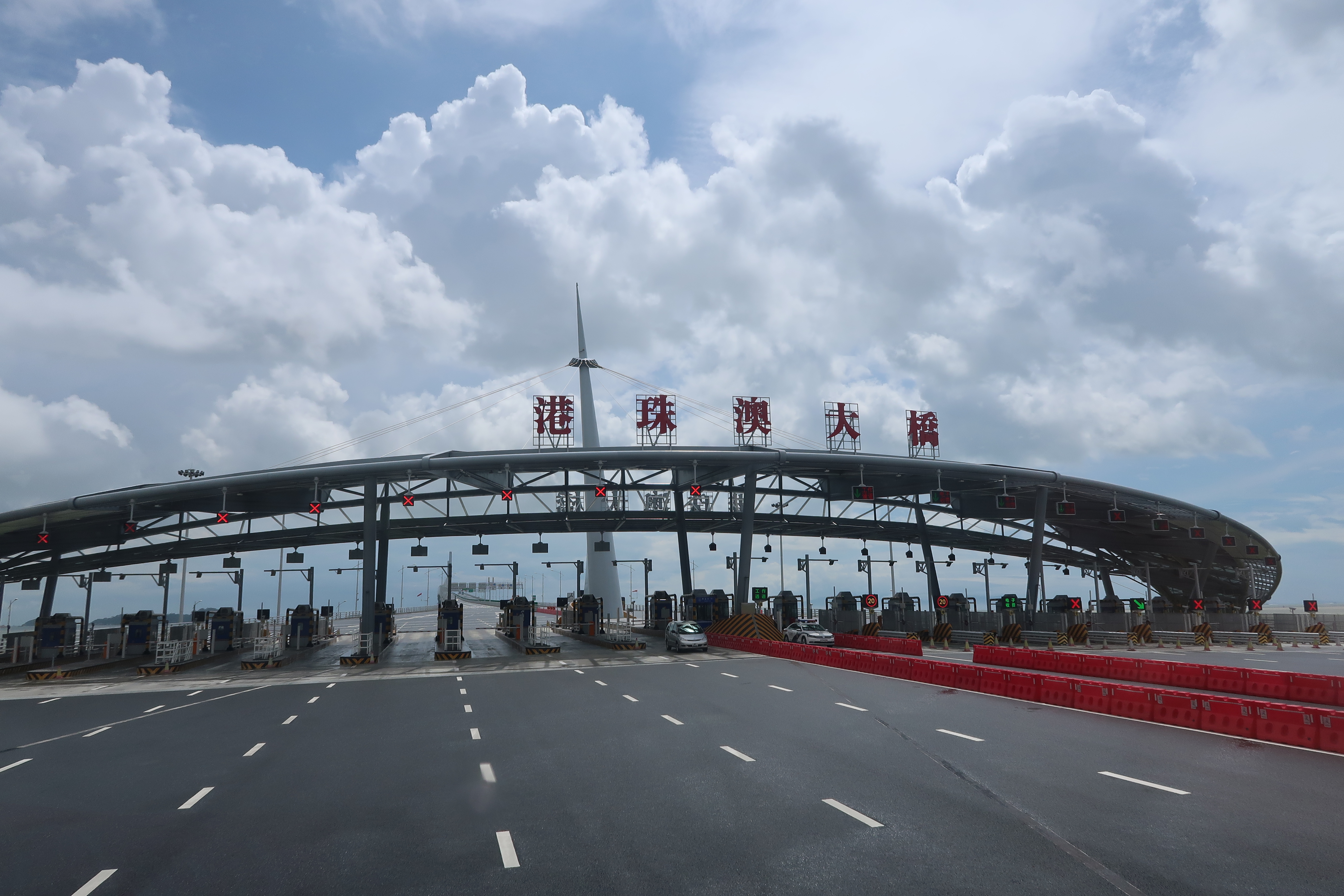
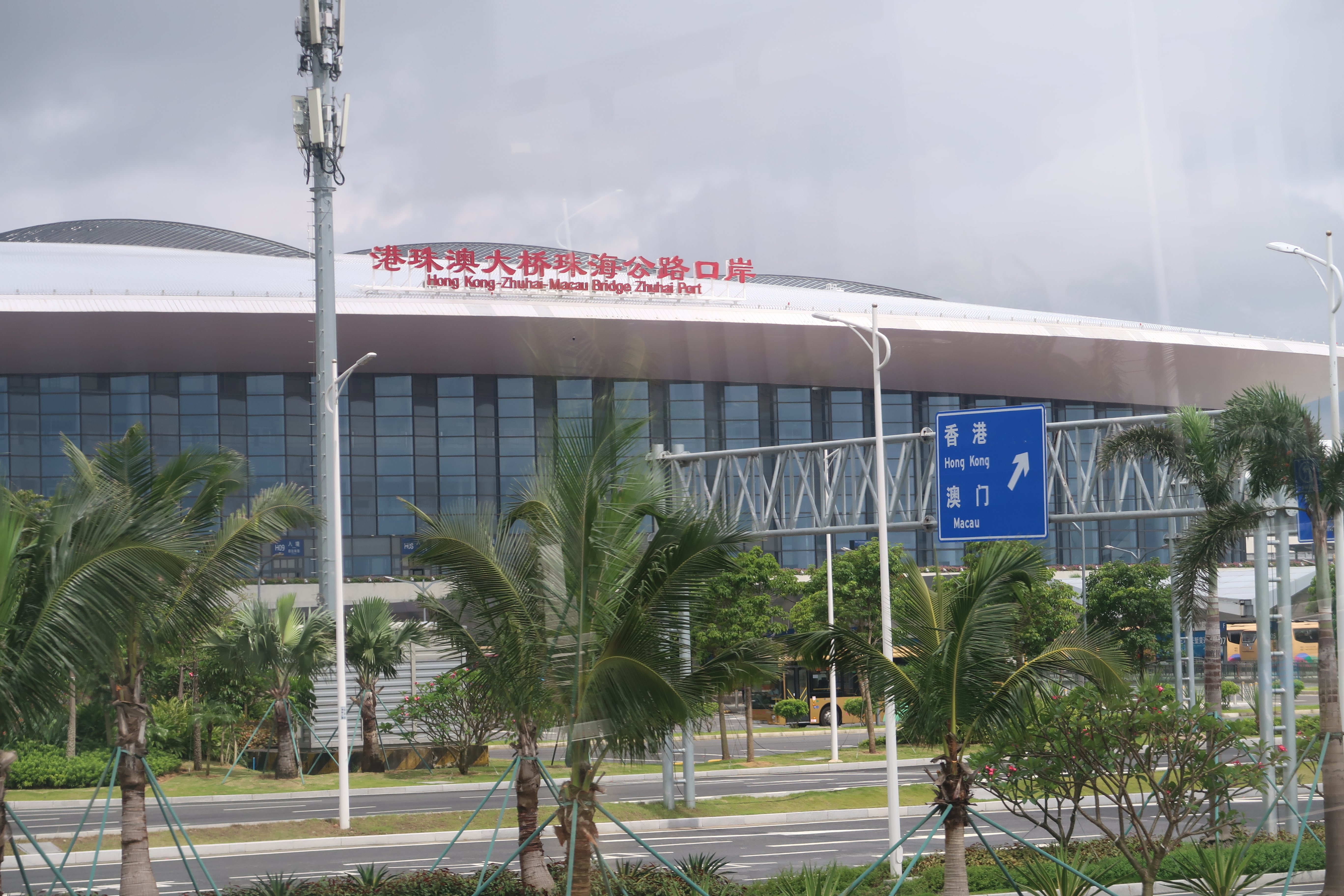
A photo of the Hong Kong-Zhuhai-Macao Bridge.

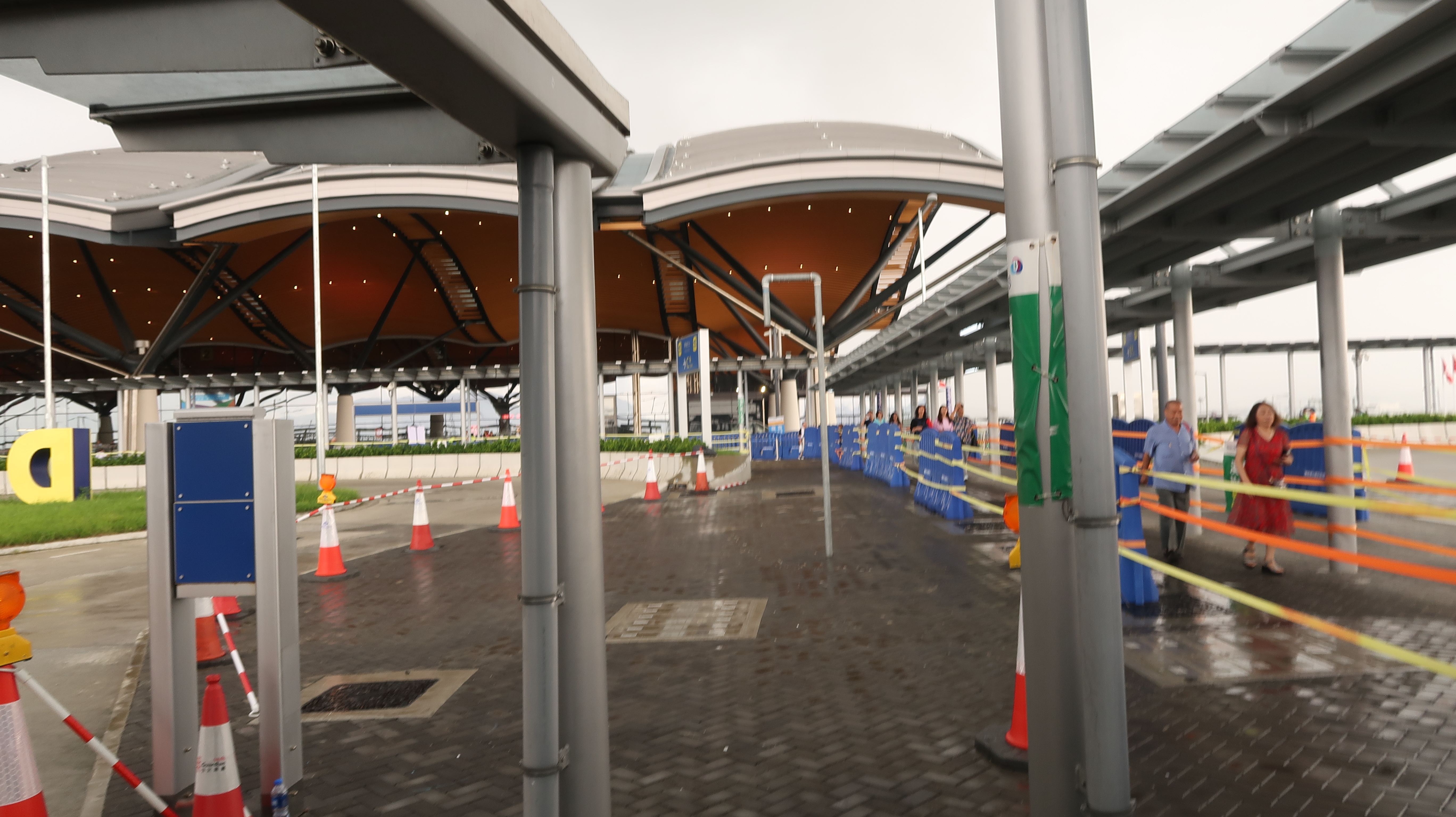
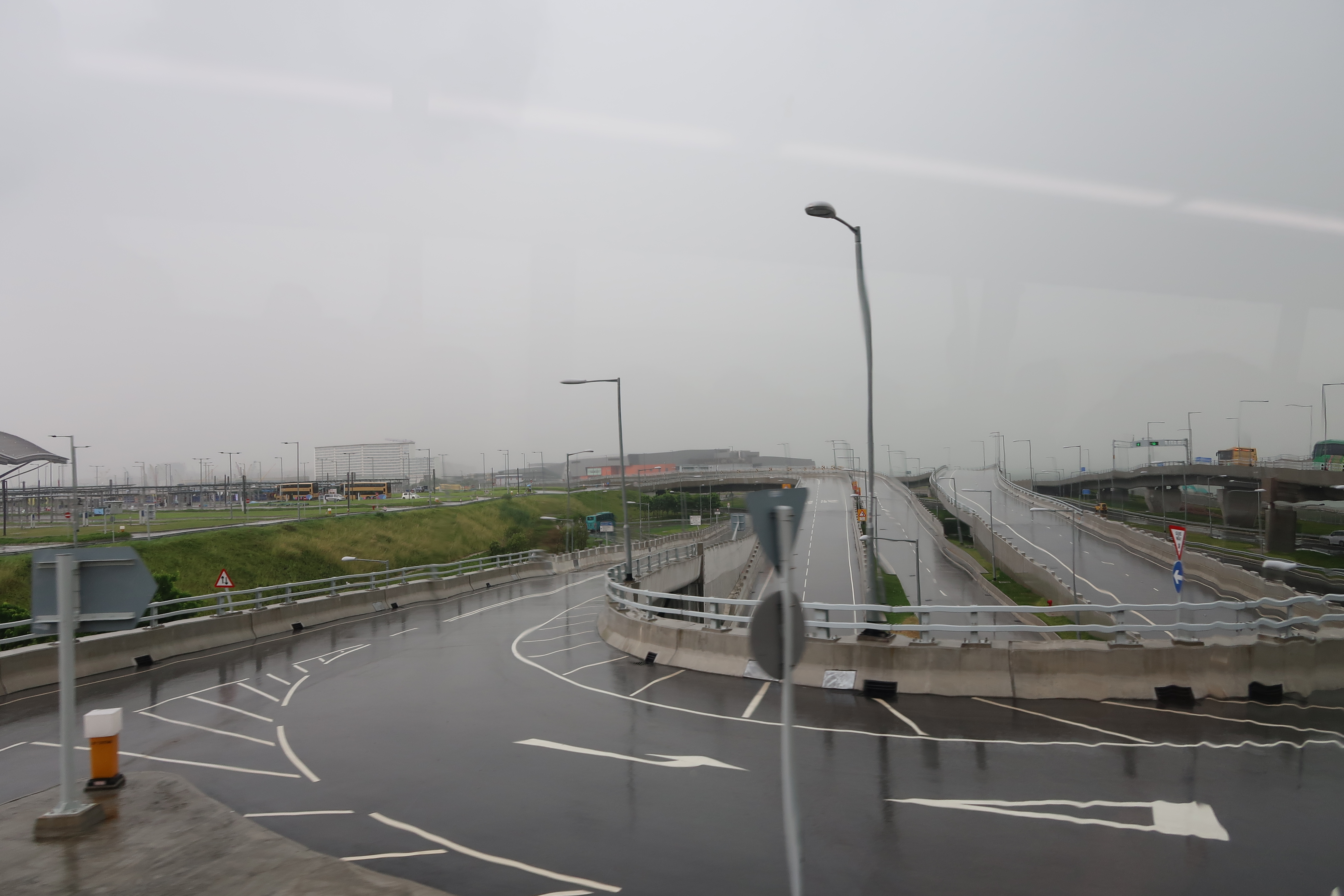
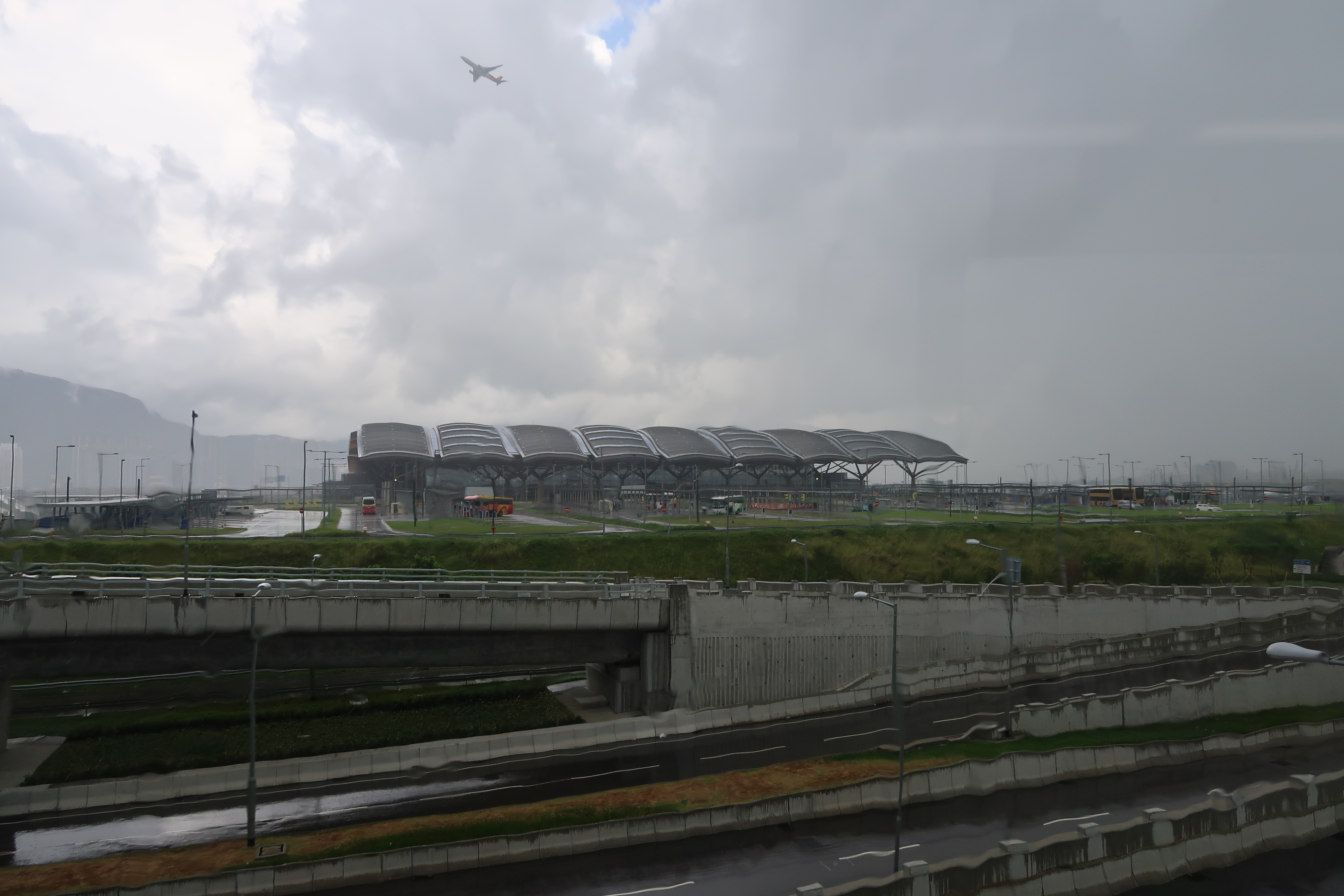
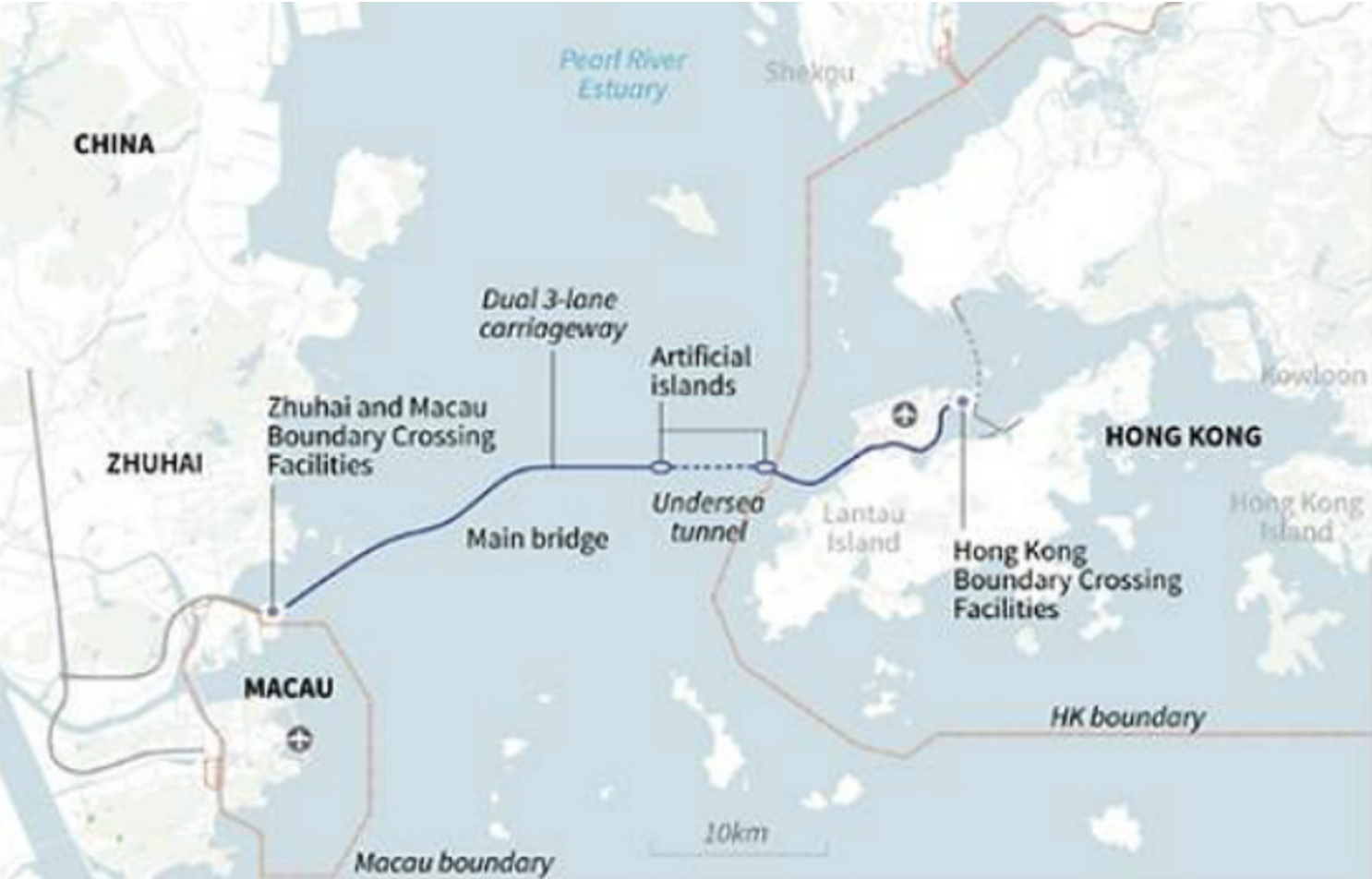
The 55-km Hong Kong-Zhuhai-Macao Bridge (HZMB), comprising the 12km Hong Kong Link Road, 29.6km Main Bridge and 13.4km Zhuhai Link Road, is the longest bridge-cum-tunnel sea crossing in the world. Operating 24 hours a day, HZMB puts major cities in the Pearl River Delta within a three hours’ commute from Hong Kong; and it will take only 40 minutes to travel the distance of approximately 42km from Hong Kong Port to Zhuhai Port and Macao Port.

It provides an alternative option to ferries which were previously the most popular means to travel between the three regions.

Hong Kong-Zhuhai-Macao Bridge

Cross-Border Buses

Cross-border buses pick up in the central urban areas of Hong Kong travel to the bridge entry, where you disembark and pass through customs, then reboard the bus to continue on to Macau, or various destinations in mainland China including Zhongshan, Zhuhai, Jiangmen, Xinhui, Kaiping, Toishan, Yangjiang, and more.

One Bus Hong Kong Macau – http://onebus.hk/en
APM Kwun Tong to Macau (The Parisian Macao, The Venetian Macao, and Macau Sands)
Buses depart regularly between 8.00 to 18.30 from APM at Kwun Tong

Fares for One Bus Hong Kong MacauMonday – Friday: Before 18:00 HK$170.00 per adult or child. On or after 18:00 HK$190.00 per adult or child

Saturday, Sunday & Public Holidays: HK$190 per adult or child

TIL Chinalink – http://trans-island.com.hk
Hong Kong (various p/up points) to Zhuhai Port depart every 15-30 mins between 7:00 – 22:00 Fare: HKD $120-130

Hong Kong to Macao (Galaxy, Venetian, MGM Cotai, Grand Lisboa, Sands, Star World) 7:30 – 22:30 Fare: HKD $160

HK – Macau services depart from Elements Mall and Prince Edward station and there is also a late night service at 1:00am and 2:00am. There is an additional fee of HK$20 for night buses between 19:01 to 06:59, and HK$20 on Saturday/Sunday and Public Holiday.

TIL Chinalink also offer services between Xinhui, Kaiping, Zhongshan, Taishan, Xinxing, Jiangmen, and Hengqin with fares ranging between HKD $140-170

HZMB Shuttle Buses

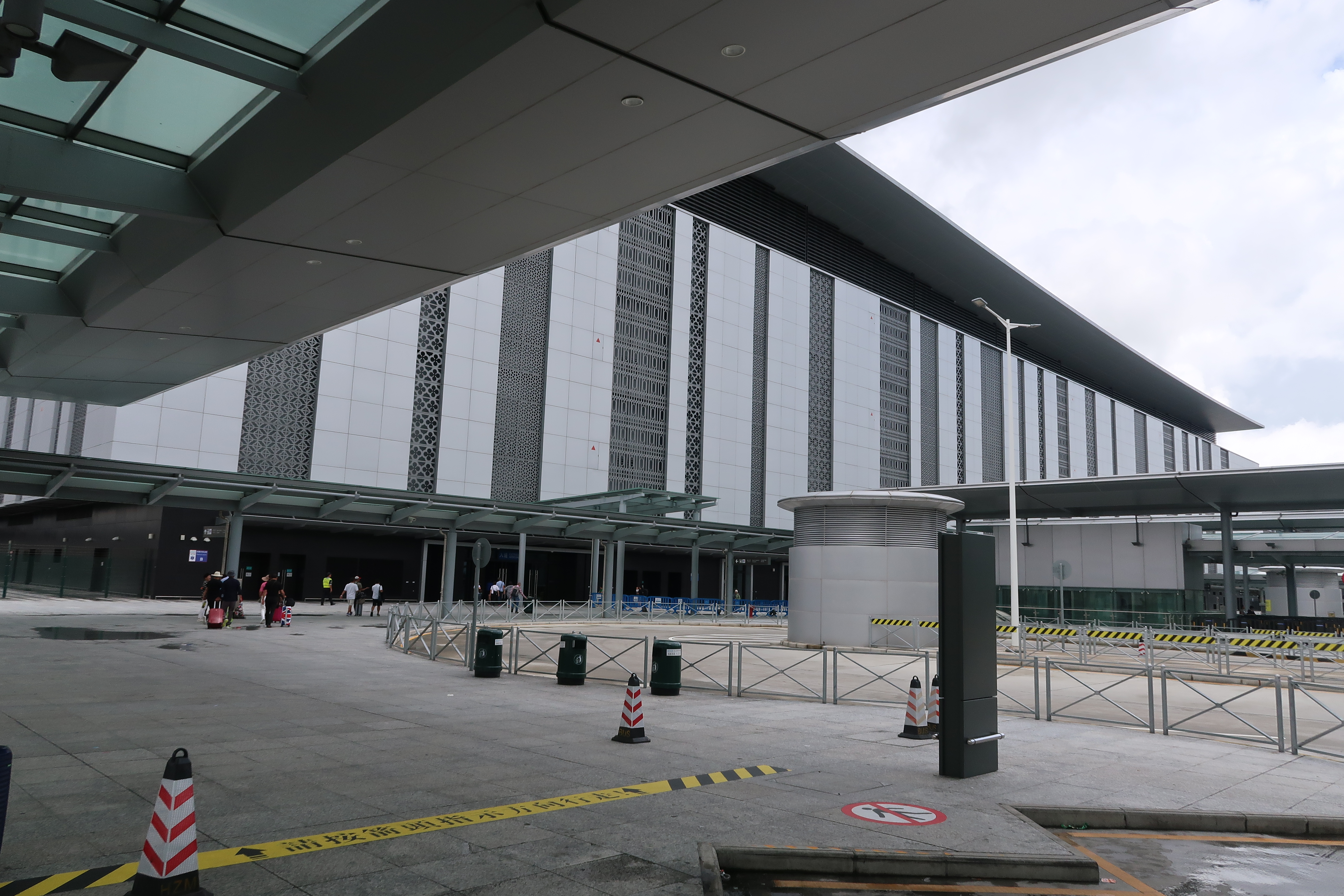
These shuttle buses transit the length of the bridge only, so you need to find your own way to and from the bridge entry/exit. More on that further down the page.

The buses operate 24 hrs a day and depart at between every 5 minutes in peak and every 30 minutes in off-peak. Journey time is 45 minutes. There are two routes being
Hong Kong to Macau – HKD $65 day rate / HKD $70 night rate

Hong Kong to Zhuhai – HKD $65 day rate / HKD $70 night rate

Private Hire Car/Limousine

Cross-boundary hire cars provide pre-booked and personalised point-to-point services. Bookings via http://trans-island.com.hk

Ride-hailing services have also begun with a seat in a 7 seat business van costing 200 HKD.

Hong Kong Observation Wheel (香港摩天輪)

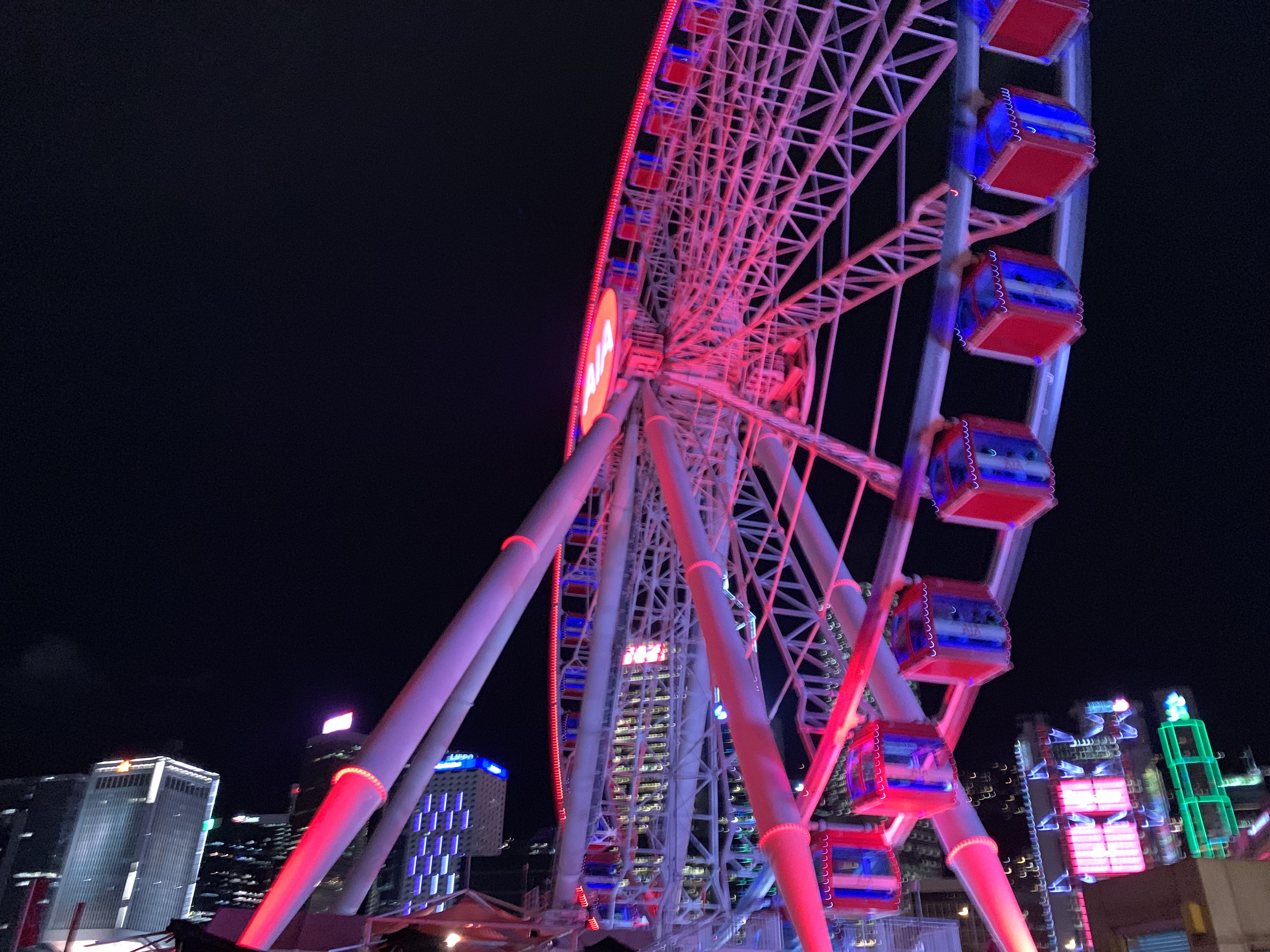
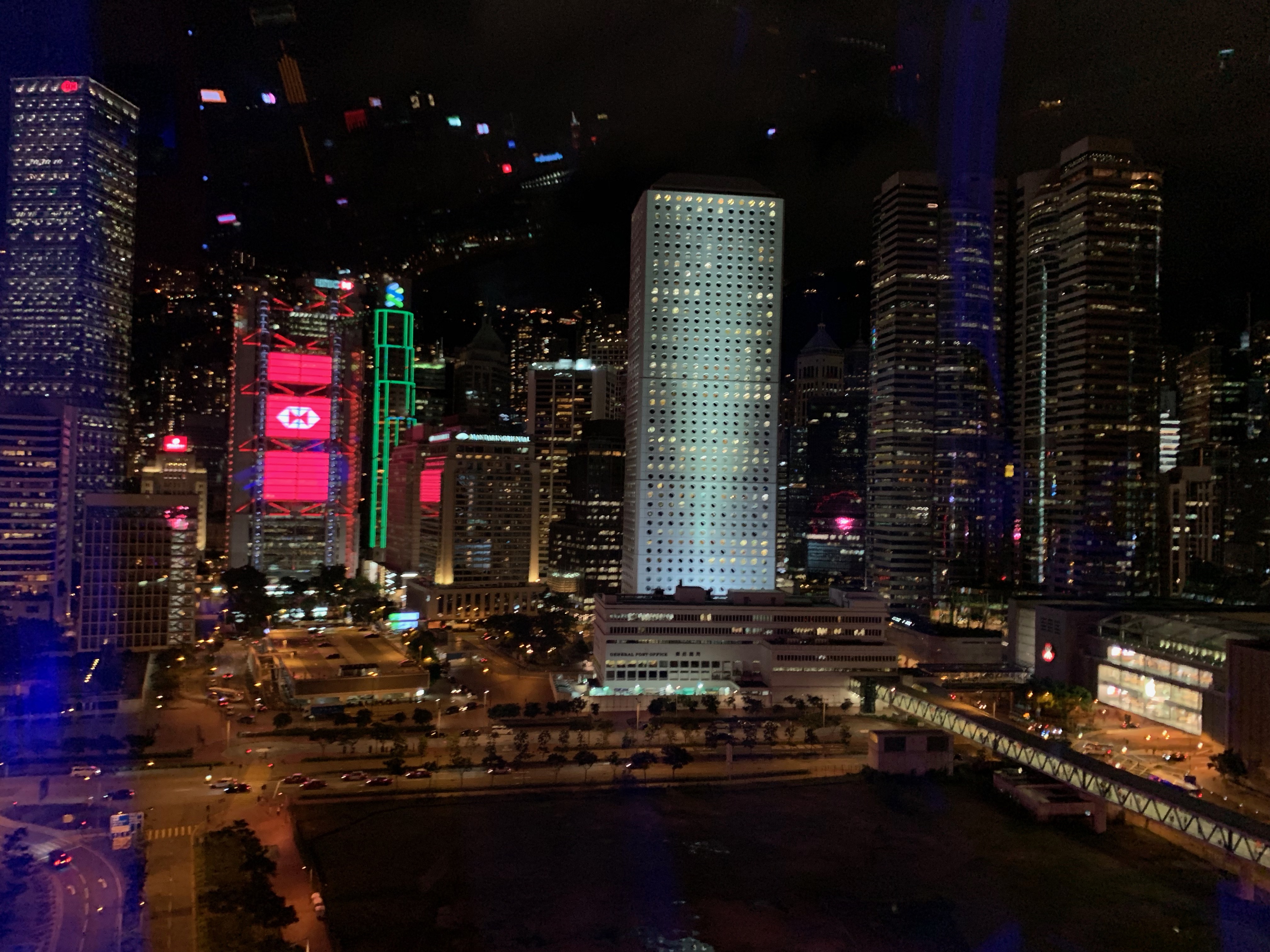
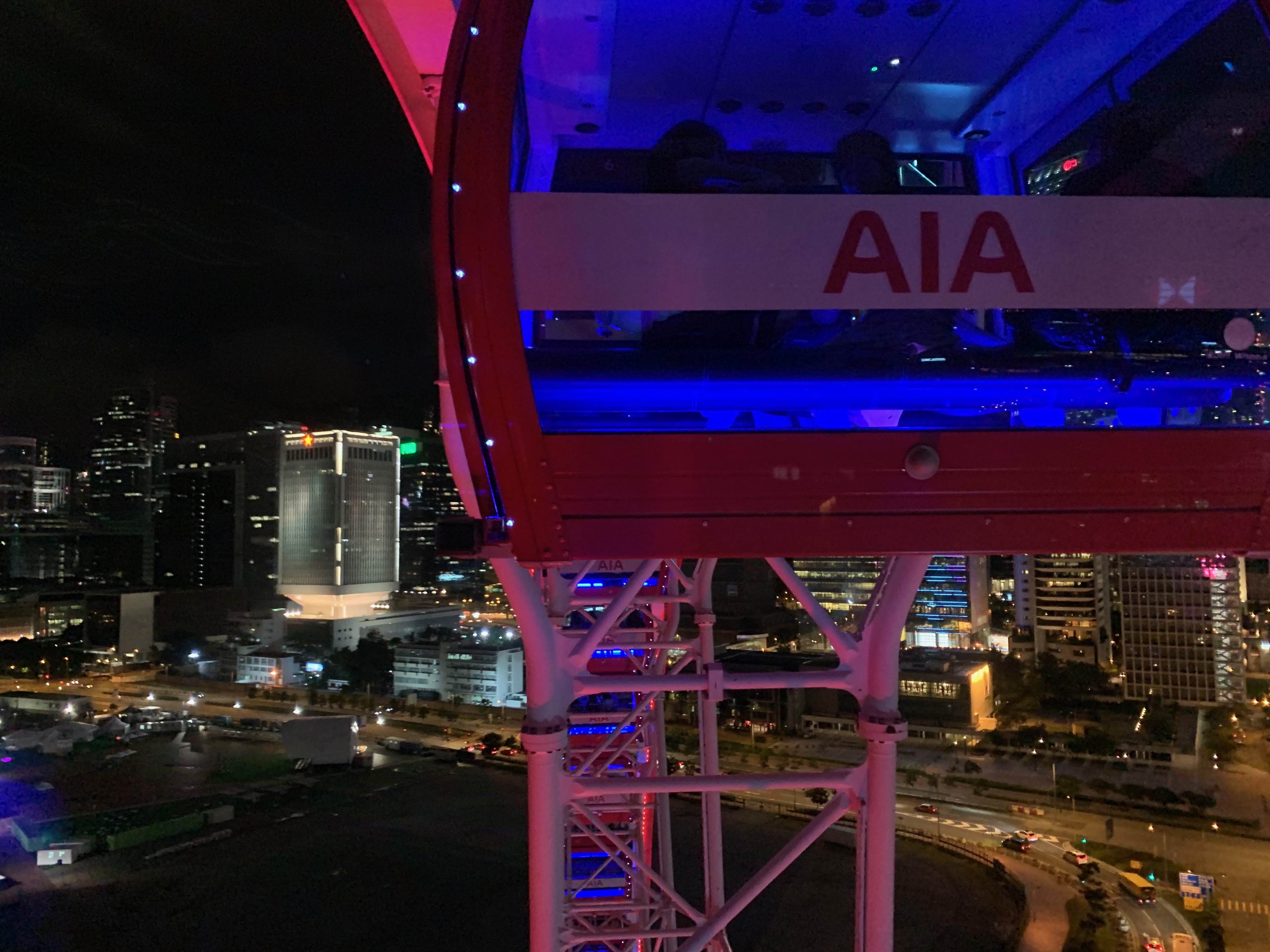
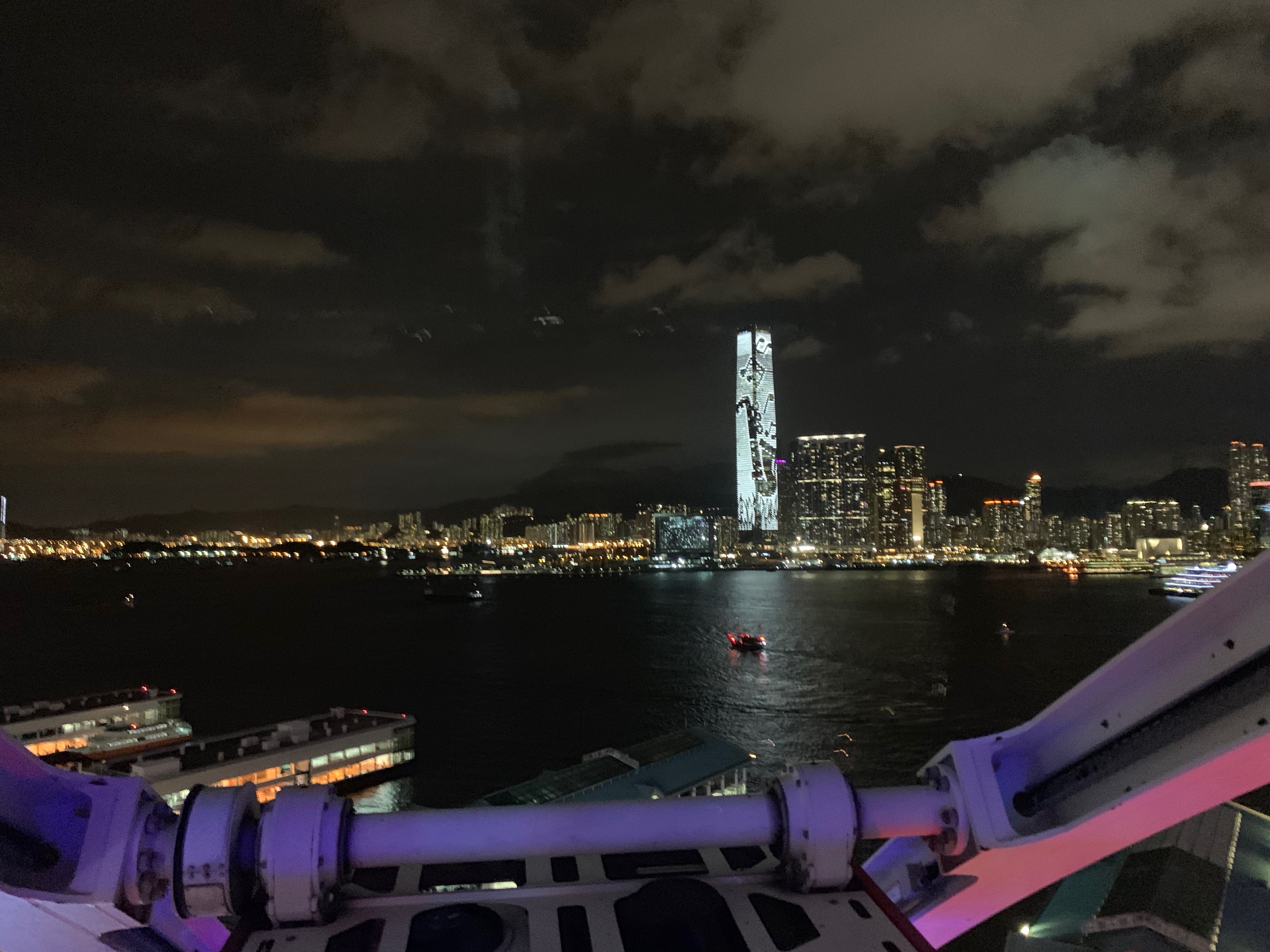
Photo of the Hong Kong Observation Wheel at night.
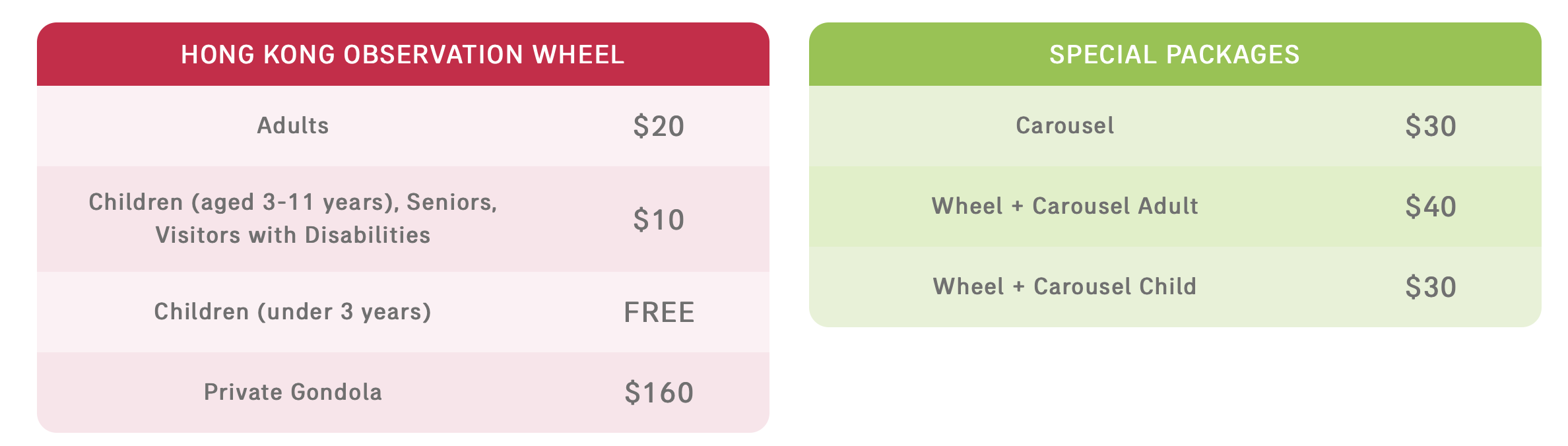
Ticket prices and information.

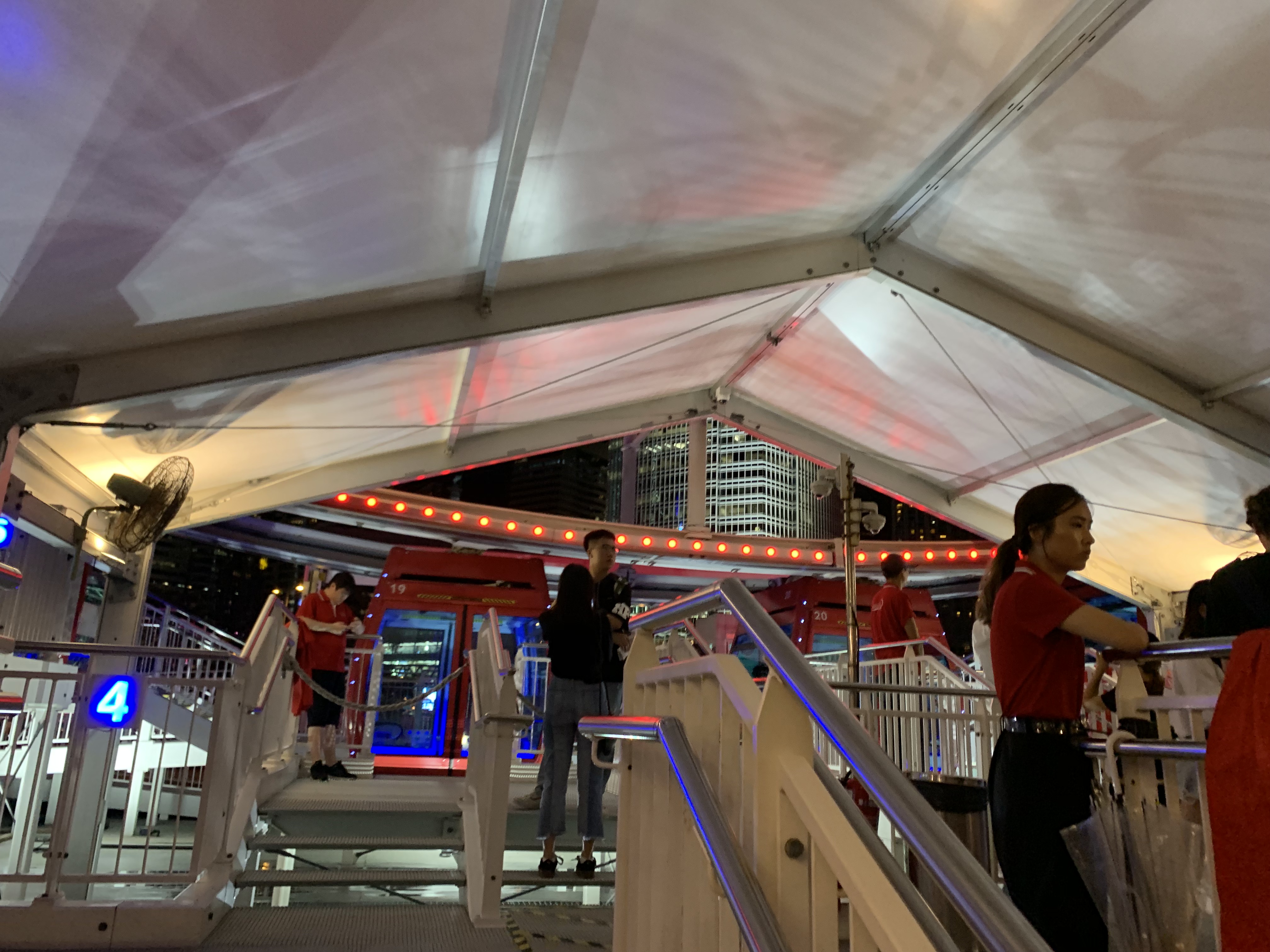
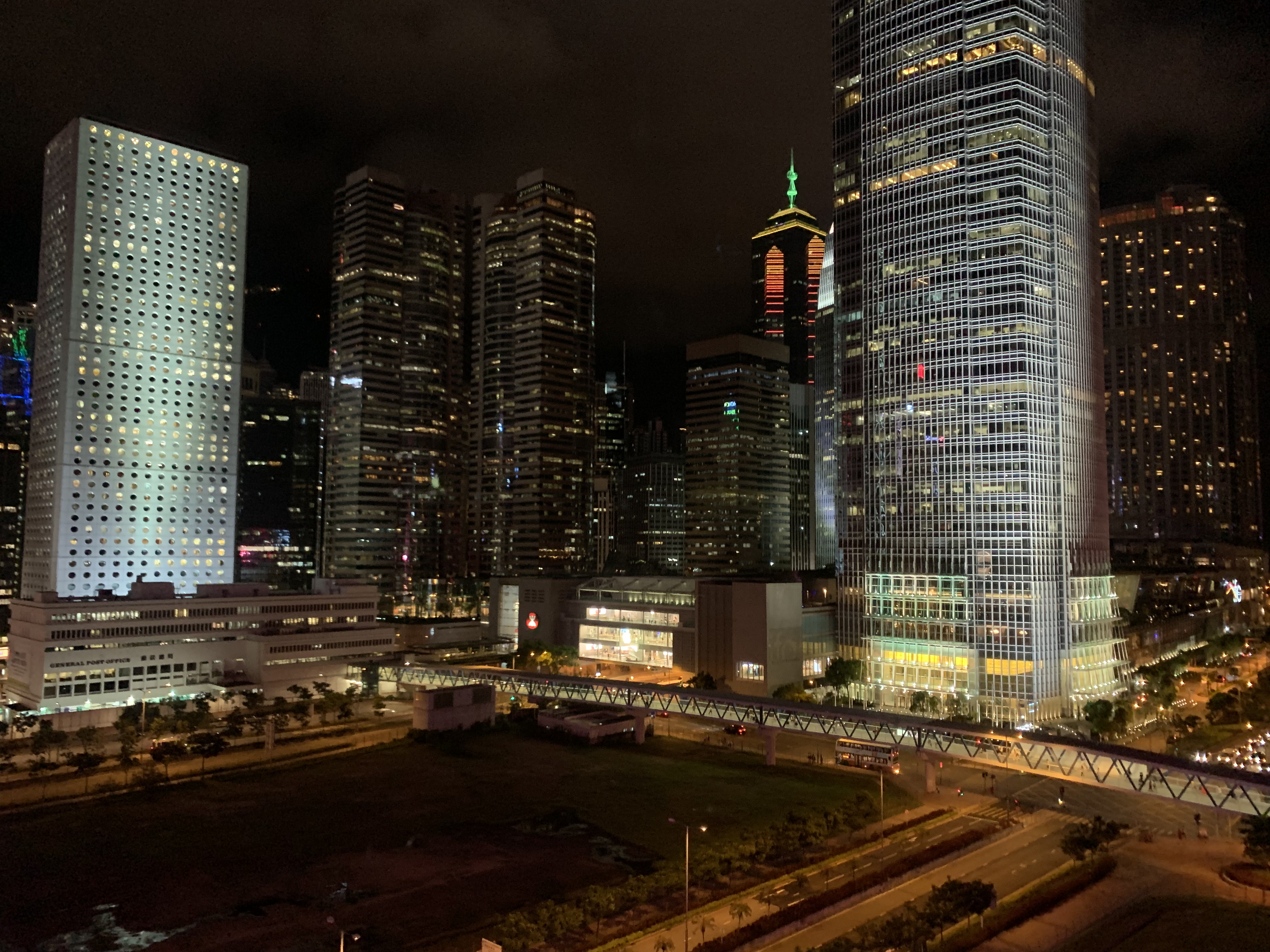
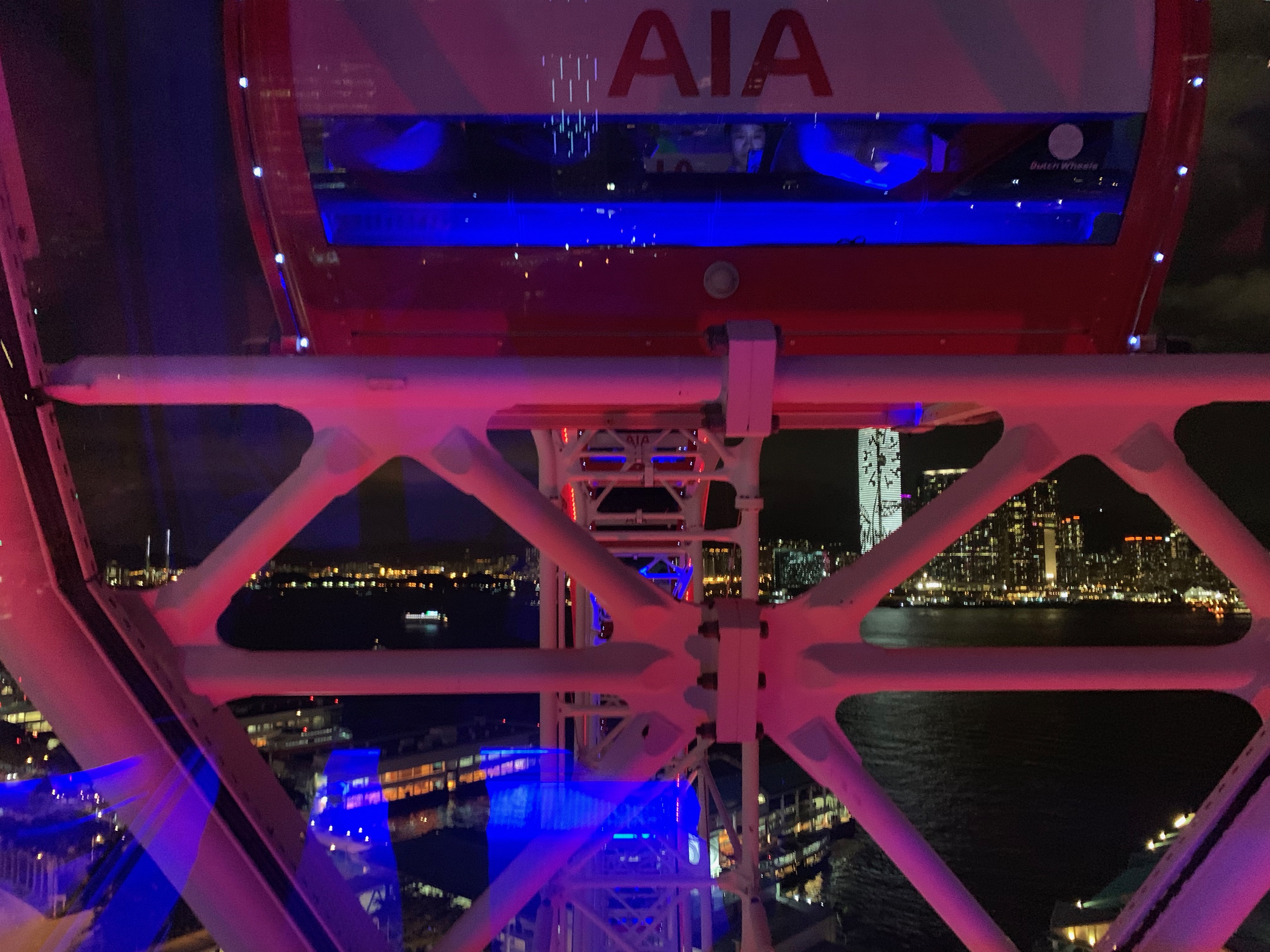
The Hong Kong Observation Wheel (HK Ferris Wheel) is an addition to the city and one of the easiest ways to get a bird’s eye view of downtown Hong Kong and Victoria Harbour. Similar to the London Eye or Singapore Flyer, each air-conditioned pod takes up to 8 people and the ride takes a little under 30 minutes. 

It’s a smooth and relaxing journey around so even those who feel uneasy with heights should soon get used to the experience. The best time to ride the Hong Kong Observation Wheel is between 6pm (the changing sky makes the backdrop especially beautiful) and 8.15pm (when the Symphony of Lights turns the buildings into a visual arts display).

It is located in Central Hong Kong, just outside the Central Ferry Terminal and across the road from IFC Shopping Mall.

Ruins of St. Paul’s (大三巴)

The Ruins of St. Paul’s with the stairs in the foreground

Constructed from 1602 to 1640 by Jesuit priests who travelled to the Far East to spread Catholicism, the Ruins of St. Paul’s is arguably Macau’s most famous landmark. Though most tourists only see the ruins of what was once “The Vatican of The East”, it serves as a reminder and icon of Macau’s vibrant multicultural society, and its rich history as a strategic military location and prosperous trading port.

The façade of the Ruins of St. Paul’s up front

The church’s design is one of a kind, featuring a mix of the East and West, a reflection of Macau’s multicultural society. At the top of the façade is a dove – a symbol of the Holy Spirit. European and Asian influences are reflected in the ruins through biblical images, Chinese characters, six Chinese lions, a Portuguese ship and bronze statues. Beneath the dove is a statue of Jesus, and around it are stone carvings of the implements of the crucifixion.

The view of Macau from the Ruins of St. Paul’s

The Ruins of St. Paul’s is situated on a knoll beside the taller Mount Fortress, and offers superb views of the wide plaza below, though this view comes at the cost of walking up several flights of stone stairs, but nonetheless a beautiful must-see sight when in Macau.

Our classmate’s expression as he reluctantly climbs up the stairs

The Ruins of St. Paul’s, though overcrowded with thousands of tourists flooding in from countries all around the world, serves as a reminder of Macau’s rich history of religion and military, and is a great introduction to Macau’s multicultural society for tourists.

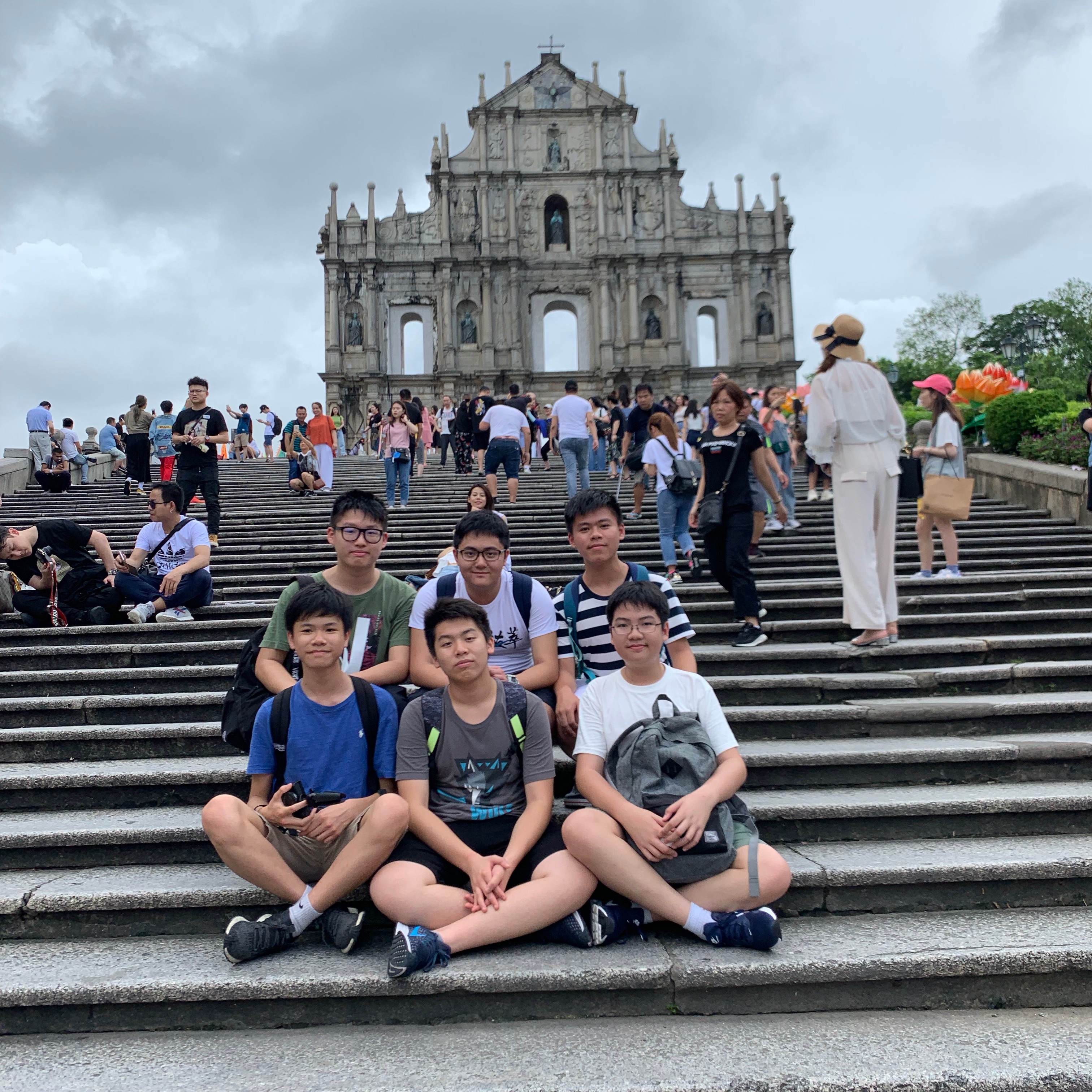
A group photo in front of the Ruins of St. Paul’s

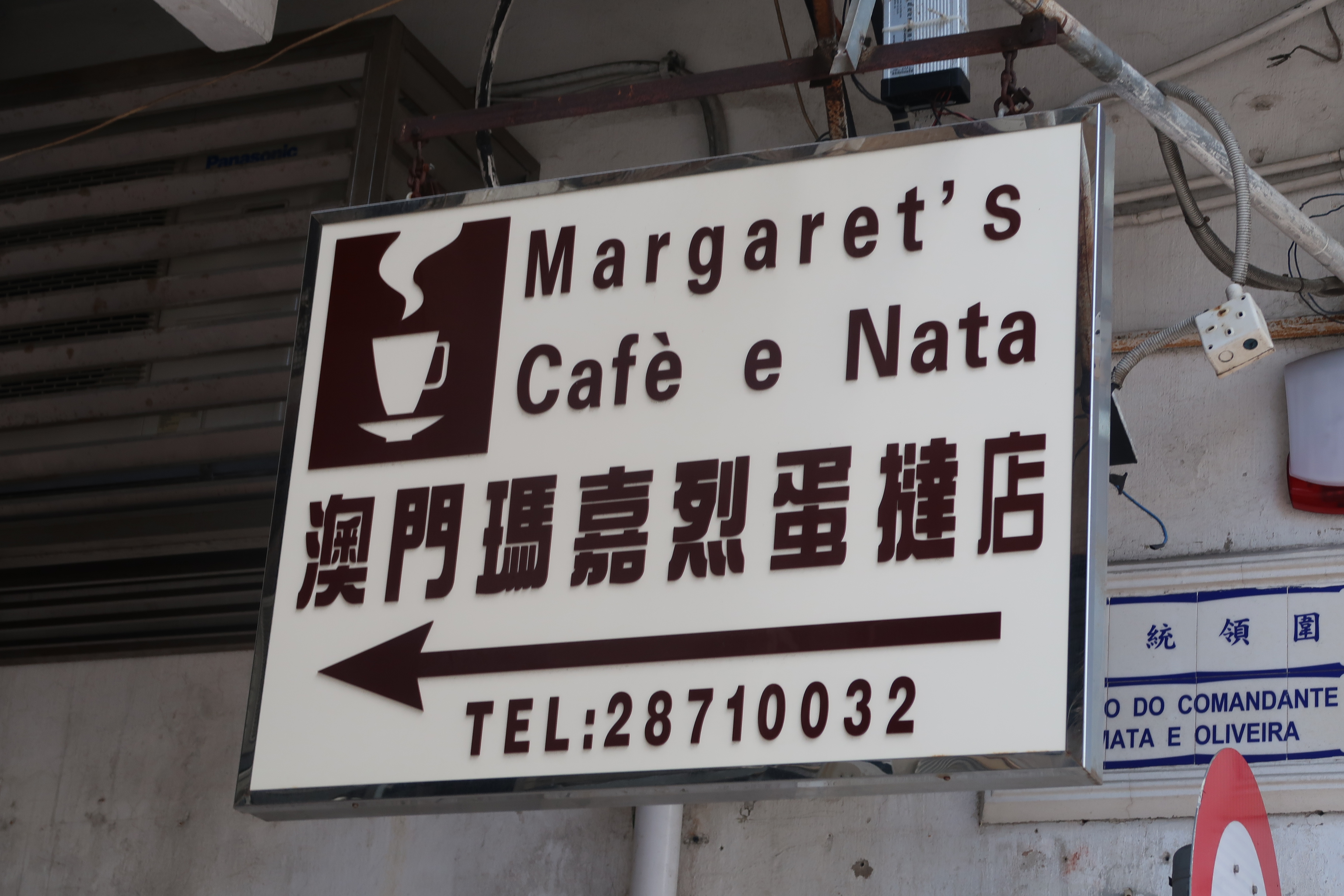
Margaret’s Cafe e Nata(澳門瑪嘉烈蛋撻店)

Exclusive: Interview with Margaret, the owner of the Cafe.

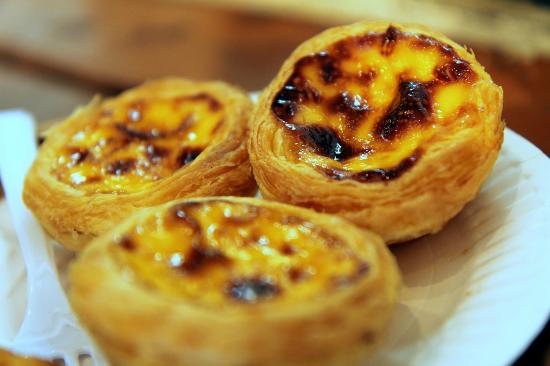
First impression: the tarts came out fresh from the oven and piping hot. We were hit with the rich aroma the instant Margaret placed the tarts on the table.

The egg tarts also looked very nice. The shell was golden brown and the custard was dotted with the infamous specks of black fro the burnt caramel. When bitten into, the puff pastry shell was hard enough to hold its shape and allowed the tart to stay in one piece when held. It was also crispy and flaky at the same time. The hint of salt in the pastry balances the sweetness of the custard interior.

Egg tarts fresh from the oven; Credits: TripAdvisor

Moreover, the burnt caramel layer on top of the custard added a layer of complexity to the tart. The bitter tones of the burnt top helped mellow up the intense richness of the smooth custard. The custard itself was also very nice. Made only of cream, eggs, sugar and milk, it was silky smooth and extremely flavorful. The tarts at Margaret’s aren’t traditional, in the sense that they don’t use custard powder, preferring to make the custard from scratch themselves. When eaten together, all the components of the tart complement each other perfectly. One of the best egg tarts in town. However, the staff of the cafe are always in a cranky mood, including Margaret herself. Even though I would be cranky too if I had to serve hundreds of rude mainland tourists a day. Beware.

Guia Fortress & Tunnel (東望洋炮台)

Image result for guia fortress
Guia Chapel and Lighthouse; Credits: Macau Government Tourism Office

Built between 1622 and 1638, Guia Fortress is built on the highest point of the peninsula, offering panoramic views of the city. However, this fortress is much more than a lookout for the modern tourist, as it was once maritime and military centre of Macau for the Portuguese army, holding a critical position as the fortress, together with Mount Fortress, was invaluable in fending off the Dutch Invasion of 1622.

On top of the fortress stands Guia Lighthouse, dating back from 1865, was the first modern lighthouse in China and is the exact position where Macau takes its coordinates; As well as Guia Chapel, which was established by Clarist nuns and displays elaborate frescoes of religious and mythological themes with both Chinese and Portuguese elements.

A cannon in front of Guia Fortress
Walking up stairs next to the tall and secure fortress walls
Spectacular view of Macau from the fortress with Hotel Lisboa and the Macau Tower at sunset

Below the fortress lies 3 sets of simple military tunnels built in the 1930s which have been used by the Portuguese army to form an important defensive network and store cannon emplacements against possible foreign invasion.

Layout of the Guia Fortress Military Tunnels
Entrance of the military tunnels
Inside the 52m long military tunnel

As we left the Guia Fortress, we walked by some creatively manicured greenery as well as modern pillboxes built by the Portuguese army, which transformed the area around the Guia Fortress into what is now a beautiful public park with historical relics for the residents to enjoy. We took the Guia Cable Car back down which allowed us to enjoy more panoramic views of Macau as we left the fortress.

A dragon made out of manicured bushes
An overgrown pillbox built by the Portuguese army in early 1900s
Cable Guia with views of Macau in the background

The Guia Fortress gives an opportunity for tourists and locals alike to escape from bustling Macau and to revisit Macau’s rich history as a strategic Portuguese military centre, or just to enjoy some fresh air.

Macao Museum (澳門博物館)

Image result for macao museum
Macao Museum; Credits: The Venetian Macao

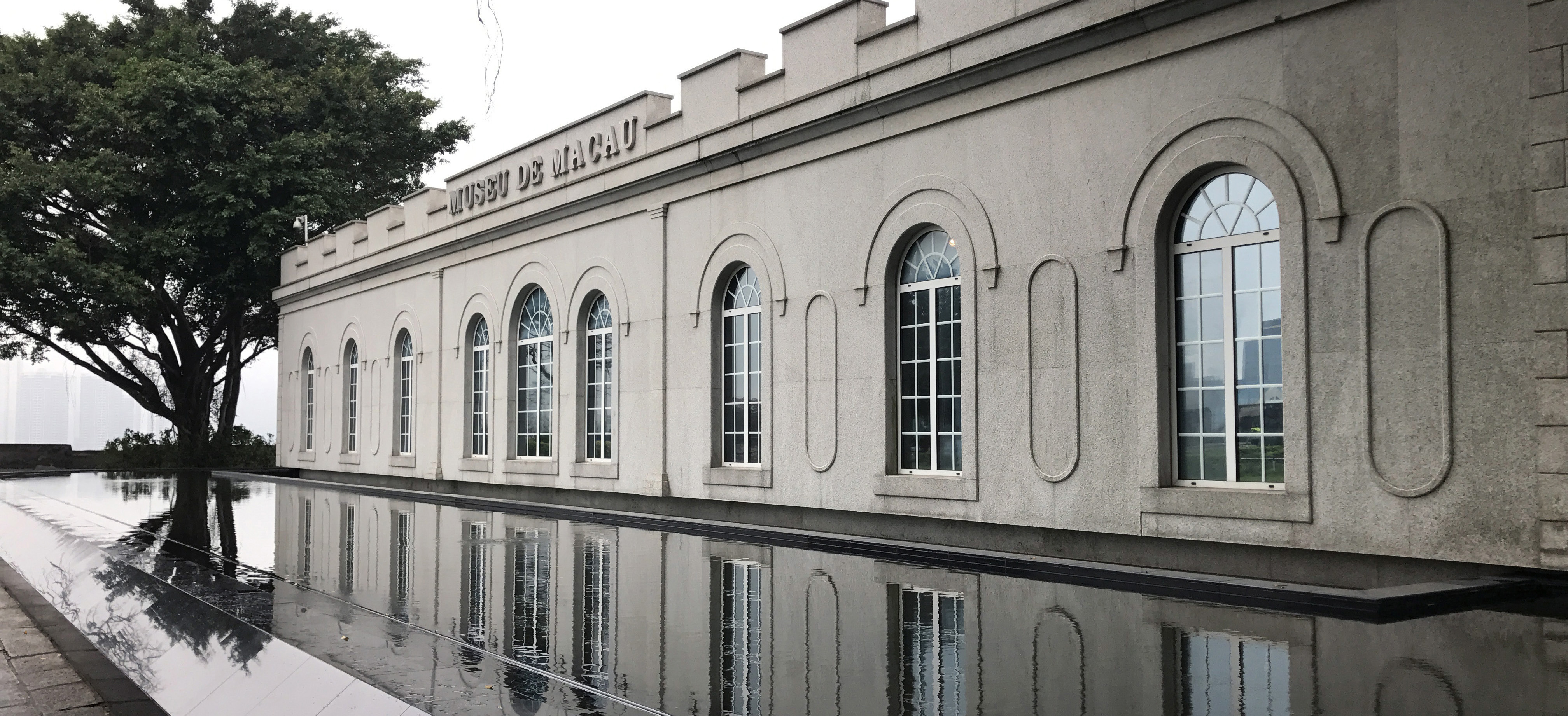
Located on top of Mount Fortress built by the Catholic Jesuits in the 17th century, this museum and its location displays the vibrant and colourful past of Macau as a humble fishing port to a strategic military defence location, and now a melting pot of Chinese and Portuguese culture, attracting millions of tourists every year with free admission.

The stairs leading towards the entrance of the museum
Entrance to the Macao Museum
Façade of the Portuguese building the Macao Museum is housed in

On the first floor, the museum displays artefacts of two early civilisations, of China’s and Portugal’s respectively, as well as the commercial activities, cultures and religions of these two vastly different regions.

A sword used by the Portuguese army
Early map of China drew by the Portuguese explorers
A store selling traditional Chinese tea

On the second floor, the museum displays how the two cultures merged together as Macao became a colony of Portugal after 1557 in terms of daily life , the culture (i.e. the language, local festivals and religious ceremonies), and the architecture.

The 1st Gutenberg printing press brought to Macau by the Portuguese
A notice in both Chinese and Portuguese in a bank.
A wedding gown with Chinese elements (the collar) and Portuguese elements (the veil)

On the third floor, there is also a temporary exhibition with artefacts loaned to the museum by foreign museums. When we visited, the theme of the exhibition was the Silk Road, which displayed cultural relics such as statues and sculptures from the Western Xia dynasty.

The face of a Buddha
A bronze sculpture of an ox
Another ancient mythical goddess

As the museum is built on Mount Fortress, the outdoor spaces of the museum offer spectacular views over the Macau peninsula and the buildings surrounding the hill.

A canon on the fortress used by the Portuguese army
Views of Hotel Lisboa in the background
A pigeon atop the fortress’ historical stone walls.

In conclusion, through displaying relics and artefacts which tell all sorts of different stories about Macau’s vibrant past as a maritime and military centre, it is a great location for tourists and locals alike to learn more about Macau’s long history.

Giant Panda Pavilion (澳門大熊貓)

The Macau Giant Panda Pavilion, located at Seac Pai Van Park in Coloane, is a nature park and animal reserve that contains a plethora of animal species, free of charge for tourists and visitors to see the exotic animals in person.

We got to visit the Giant panda reserve, home of three pandas. It was free of charge to see the animals, but a 10 dollar ticket fee was required for the panda enclosure. During our visit, two pandas were seen feeding on bamboo, which proved to be quite entertaining for our classmates.

A giant panda chomping on some bamboo
Another giant panda eating its breakfast for seemingly 10 hours

Another giant panda was seen napping throughout our visit, though at the end it did wake up to eat breakfast.

After the giant pandas, we also visited other reserves, like their feces, red pandas and monkeys

Panda poo poo
Red panda
A monkey that got verbally bullied by some of our classmates
Before leaving, some classmates purchased merchandise from the gist shop

Overall, the park provides a cheap way (free-of-charge for other animals, 10 for giant pandas) for tourists to see exotic animals in Macau, which was great material to calm our minds before the impending doom that is the hike.

Macau Tower (澳門旅遊塔)

Image result for macau tower
Credits: Klook

Macau Tower is located in Macau, a Special Administrative Region of the People’s Republic of China. Macau was a Portuguese colony until 1999. Construction on the tower started in 1998, after a visit by Macau businessman Dr. Stanley Ho Hung-Sun to the Sky Tower in Auckland, New Zealand. He was so impressed with the Sky Tower, he decided he’d like to build one like it in Macau!

On top of the glass-bottomed floor at 58/F
Overlooking where the bungee-jumpers land

At 338m, Macau Tower looms above the narrow isthmus of land southeast of Avenida da República. You can stay put on the observation decks on the 58th and 61st floors, or challenge yourself to some gravity-defying sport: the tower hosts a climbing wall, a bungee platform (said to be the highest commercial bungee jump in the world), a sky walk around the rim of the tower and more.

A monitor displaying the brave bungee jumpers
Exhibitions of Macau’s past at the Macau Tower’s museum

We had a terrific lunch buffet at the 360° Cafe Revolving Restaurant on the 60/F for MOP 308 where we enjoyed authentic Portuguese dishes such as roasted suckling pig and Pastéis de Bacalhau (Salt Cod Fritters) , not to mention the bird’s eye view of the Macau Peninsula and Taipa, as well as neighbouring Zhuhai. After a wonderful buffet, we had a walk around the indoor and outdoor observation decks and watched several people bungee jump.

Our tickets to the revolving restaurant – 360° Cafe
A view of Macau from the restaurant

Overall speaking, a great way to officially start our adventure in Macau!

Design a site like this with WordPress.com
Get started